Crusher Run vs 57 Stone: Which Gravel Is Best for a Driveway?
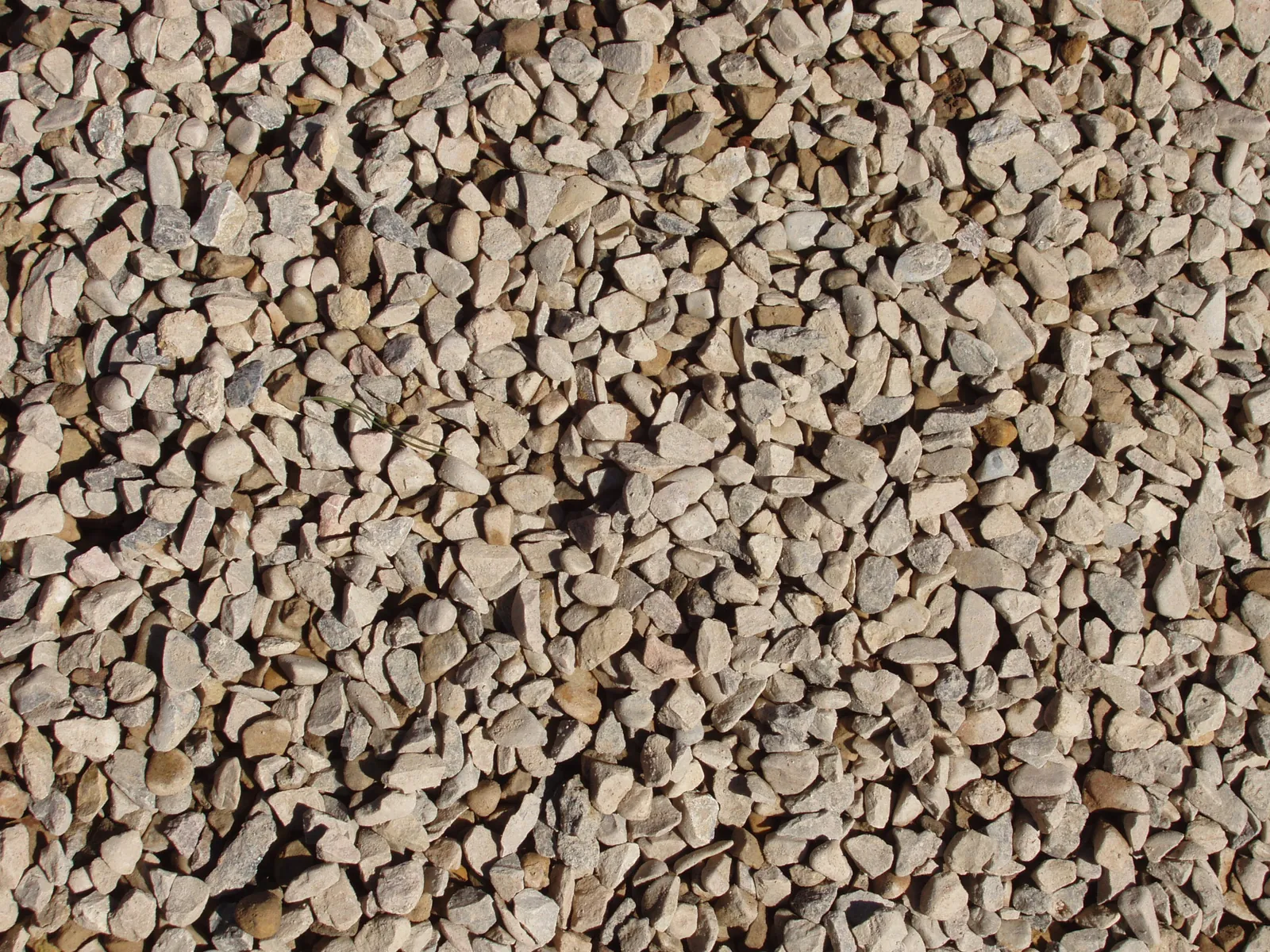
For the surface you drive on, crusher run is the better stone. It keeps every size the crushers make, down to the fine dust. That dust binds the stone, so crusher run packs into a hard crust that sheds water.
57 stone is clean stone with almost no fines. Water runs right through it, but it never binds, so it stays loose under tires. The Federal Highway Administration’s gravel roads guide explains why. Stone with very little fine material will not form a crust, and the guide calls it very difficult to maintain.
The stone is only part of the answer. Shape and water decide more than the stone does. Our gravel driveway work covers new drives and the regrading of worn ones.
What Is the Difference Between Crusher Run and 57 Stone?
The difference is the fine material. Crusher run keeps all of it. 57 stone has almost none.
| Crusher run | 57 stone | |
|---|---|---|
| What it is | Crushed stone with every size the crushers make | Clean stone in one size band |
| Size | From the top stone down to dust | About 1 inch down to about 3/16 inch |
| Fines | Yes, down to dust | Almost none |
| Packs into a crust | Yes | No, it stays loose |
| Water | Sheds water off the packed surface | Runs through the gaps |
| Where it belongs | Driving surfaces and road shoulders | Drain lines and wet pipe trenches |
Why Does Crusher Run Pack Into a Hard Driveway Surface?
The federal guide says gravel is a mix of three sizes of material: stone, sand and fines. Without a good blend of the three, the gravel performs poorly.
The stone gives it strength to carry loads. Sand fills the gaps between the stones. The fines bind it together, so the surface forms a crust and sheds water.
Crusher run carries all three. In Virginia’s highway specs (VDOT), crusher run holds every size the crushers make. The stone goes through a series of crushers down to a set top size. VDOT lists it for repairing and building all-weather private access pavements, and allows it as a final riding surface.
West Virginia’s highway spec has a crusher run class too. Between 4 and 20 percent of it passes the No. 200 sieve. Particles that fine are dust, too small to see one at a time.
Why Does 57 Stone Stay Loose on a Driveway?
57 stone is what the specs call an open-graded stone. In VDOT’s table, 95 to 100 percent of it passes a 1 inch sieve. Only 25 to 60 percent passes a half inch sieve. No more than 10 percent passes the No. 4 sieve, and no more than 5 percent passes the No. 8.
The federal guide uses the No. 4 sieve as the line between stone and sand. So 57 stone is nearly all stone, with almost no sand or dust to fill the gaps. Those open gaps let water drain through.
The same gaps are why it never binds. The guide makes this point about base gravel, which has bigger stone and very little fine material. Used as a surface, it will not form a crust to keep it bound together. Traffic also loosens surface stone and pushes it to the edges and between the wheel tracks.
Why Is Crushed Stone Better Than Rounded Gravel?
Whatever you order, order crushed stone. The federal guide says broken stones embed into a gravel surface much better than rounded, natural-shaped stone. Fractured stone also resists movement under loads better.
Quarry stone is often very good material, the guide adds, because it is virtually all fractured particles. Its advice on gravel is simple: it pays to use the best quality material available.
What Do West Virginia and Virginia Call These Stones?
Stone names change at the state line, and our work covers both sides of it. 57 stone keeps its name. Both states’ specs size it from about 1 inch down to the No. 4 sieve.
West Virginia’s Division of Highways sorts its base stone into numbered classes. Its Class 10 is marked for crusher run material only. Elsewhere the same spec calls it Class 10 Shoulder Stone.
VDOT sorts crusher run by top size. All of its size 25 passes a 1 1/2 inch sieve. All of its size 26 passes a 1 inch sieve.
VDOT also has two dense-graded stones, 21A and 21B. Like crusher run, they run from stone down to dust, with each size held to a set range.
In 21A, 6 to 12 percent passes the No. 200 sieve. 21B is coarser, with 4 to 7 percent. VDOT uses both to form a foundation under a base or a paved surface.
Where Does 57 Stone Earn Its Place?
57 stone belongs where water needs to move. VDOT backfills its underdrain trenches with No. 57 or No. 8 stone. It builds those drains with pipe and stone, plus a drainage fabric. Where water stands in a pipe trench, VDOT beds the pipe in No. 57 too.
A French drain in a yard works the same way. The pipe sits in clean stone, and ground water finds its way out through the gaps. We dig drain trenches with our mini excavator. See our French drain and drainage work, or the French drain cost guide for drain line prices.
What Should You Order for a Gravel Driveway?
For the surface you drive on, order crusher run. If a Virginia supplier offers 21A, that is VDOT’s dense-graded stone, also stone down to dust. Either way, ask for crushed quarry stone.
Then put the effort into shape and water. Without a crown, the federal guide says, water will quickly collect on the surface and soften the crust. Water held in the surface can lead to ruts. The guide recommends a crown that rises about 1/2 inch per foot, or about 4 percent.
Ditch lines carry the water once it leaves the surface. The guide counts standing water anywhere in a road, the ditch included, among the major causes of damage. On a worn drive, it says to shape the surface first. Filling the bad spots with new gravel alone can get very expensive.
Crowns and ditch lines are gravel road grading work. The base under a new drive is grading and site prep. Prices per ton and how much stone a drive takes are in our gravel driveway cost guide.
Who Brings the Stone and Who Spreads It?
The stone comes in on the quarry or supplier truck. We tell you what to order and how many tons. We set where each load gets dumped, then spread it and pull the crown in.
We are based in Augusta, in Hampshire County, and work across the Eastern Panhandle and the northern Shenandoah Valley. Estimates are free. Call or text (540) 327-1400, or read more about our gravel driveway work.