How Much Does Forestry Mulching Cost per Acre in West Virginia?
Published cost guides put forestry mulching at $500 to $2,000 an acre on light brush. Mixed brush with small trees under six inches runs $1,500 to $3,500 an acre. Dense brush with larger trees runs $3,000 to $6,000 an acre. A contractor pricing guide built for West Virginia sits tighter, at $1,190 to $2,100 an acre.
By the hour and the day the numbers hold steadier. One national cost guide puts mulching at $150 to $250 an hour, or about $400 an acre on easy ground. The same West Virginia guide puts machine and operator day rates at $2,400 to $3,800.
Every figure below comes from a published guide or an Extension survey. These are market numbers, not our price list. We quote forestry mulching in Hampshire County after we look at the ground.
What does forestry mulching cost per acre in West Virginia?
A contractor pricing guide for this state lists forestry mulching at $1,190 to $2,100 an acre. National guides run wider, because they sort by what is growing. Light brush starts near $500 an acre. Heavy growth with bigger stems reaches $6,000 an acre. What you buy is machine hours, and thick ground eats hours fast.
| Job type | Published range | What moves it |
|---|---|---|
| Light brush and briars | $500 to $2,000 per acre | Open ground, few woody stems, one pass |
| Mixed brush and saplings | $1,500 to $3,500 per acre | Stems under six inches, second passes |
| Dense brush with larger trees | $3,000 to $6,000 per acre | Stem size, slower travel, more grinding |
| West Virginia range | $1,190 to $2,100 per acre | A state page from a contractor pricing guide |
| Per hour | $150 to $250 | Density nobody can see from the road |
| Per day, machine and operator | $2,400 to $3,800 | How many acres that day actually covers |
Why do published mulching prices swing so far?
Because an acre means something different to each guide. One national cost guide prices a mulching pass at $400 to $600 an acre. A contractor pricing chart lists forestry mulching at $1,800 to $4,000 an acre. The low number fits a light pass over thin brush. The high one fits a full day of grinding on packed ground.
Most acreage around Augusta is the second kind. Old pasture fills in with multiflora rose, autumn olive, briars and saplings. A ridge tract carries a brush layer under the oak and hickory. Both take real machine time.
The low numbers still matter. They tell you what an easy acre should cost. A field that is mostly grass and briars is often a brush clearing job with a cutter instead.
What does forestry mulching cost per hour and per day?
A national cost guide puts forestry mulching at $150 to $250 an hour. A 2025 Maryland and Delaware Extension survey lands in the same place. It lists clearing land at $150 to $250 an hour, with a $175 median. By the day, a West Virginia pricing page puts machine and operator rates at $2,400 to $3,800.
Hourly pricing shows up on thick ground for one reason. Nobody can count stems from the road. An acre of light brush grinds down in a couple of hours. An acre of woody stems on a bank can take most of a day.
Ask how the hours get counted before the work starts. Travel time and fuel stops get handled differently. A per acre price with a cap on it is easier to compare than an open clock.
How many acres can a mulcher cover in a day?
A contractor pricing guide puts a forestry mulcher at 1 to 3 acres a day. Density and machine size set where a job lands. A 2022 Virginia Cooperative Extension publication says an acre may take anywhere from one to eight hours to clear. Those two figures are the fastest way to sanity check a quote you already have.
Run the math on the day rate. At $2,400 to $3,800 a day and two acres covered, you land at $1,200 to $1,900 an acre. That sits inside the West Virginia per acre range above.
If a quote assumes three acres a day on ground packed with stems, ask what the machine is. If it assumes half an acre a day on open briars, ask why. The answer is usually slope, rock or stem size.
What raises the price on ridge and valley ground?
Slope and rock, mostly. A contractor pricing guide adds 20 to 30 percent for moderate slopes. Steep or rocky ground can add 40 to 60 percent to the base rate. Hampshire County is long ridges and narrow valleys. A lot of acreage carries a grade, with shale close to the surface.
Access is the next line. The same guide puts mobilization and setup at $500 to $1,500 or more on hard access jobs. A narrow lane or a soft field adds time before any grinding starts.
Wet ground slows a mulcher too, so a spring week cuts slower than a September week. Acreage works the other way. That guide lists volume discounts of 10 to 25 percent once a job passes five acres.
The finish you want also moves the number. A single pass leaves a coarser chip layer and costs less. A fine, even layer takes more passes over the same ground.
What gets added after the mulching is done?
Mulching cuts and grinds, and it does not dig. A mulcher head takes stems down to the surface and leaves the roots in the soil. That suits trails and pasture. Ground that will hold a cabin, a shed or a new drive needs the roots out. That part is a separate line on the quote.
We pull stumps with the mini excavator, roots and all, then backfill the hole. Our stump removal work gets quoted on its own after a mulching job. A pad or a lot that has to sit level then goes to grading and site prep.
Our post on what clearing an acre costs carries the published stump and hauling numbers. Read it before you set a mulching quote beside a full clearing quote.
How do you compare two mulching quotes?
Put both quotes in the same units first. One contractor may price by the acre while the other prices by the day. Those two only line up once you know how many acres the day is meant to cover. After that, six questions explain almost every gap between them.
- The unit: per acre, per hour or per day
- The biggest stem included, and what happens to anything larger
- How many passes, and how fine the chips get left
- Mobilization, and the minimum charge on a small lot
- Whether stumps or grading sit inside the price
- The acreage break, which runs 10 to 25 percent past five acres
Stem size is where quotes part company. Guides split their pricing tiers at six inches of stem. Get the stem size your quote covers in writing.
Getting a real number for your own acreage
Published ranges show you the shape of the market. They cannot see your stems, your slope, your wet spots or your lane. Only a look at the ground settles what an acre costs on your property. That look is free.
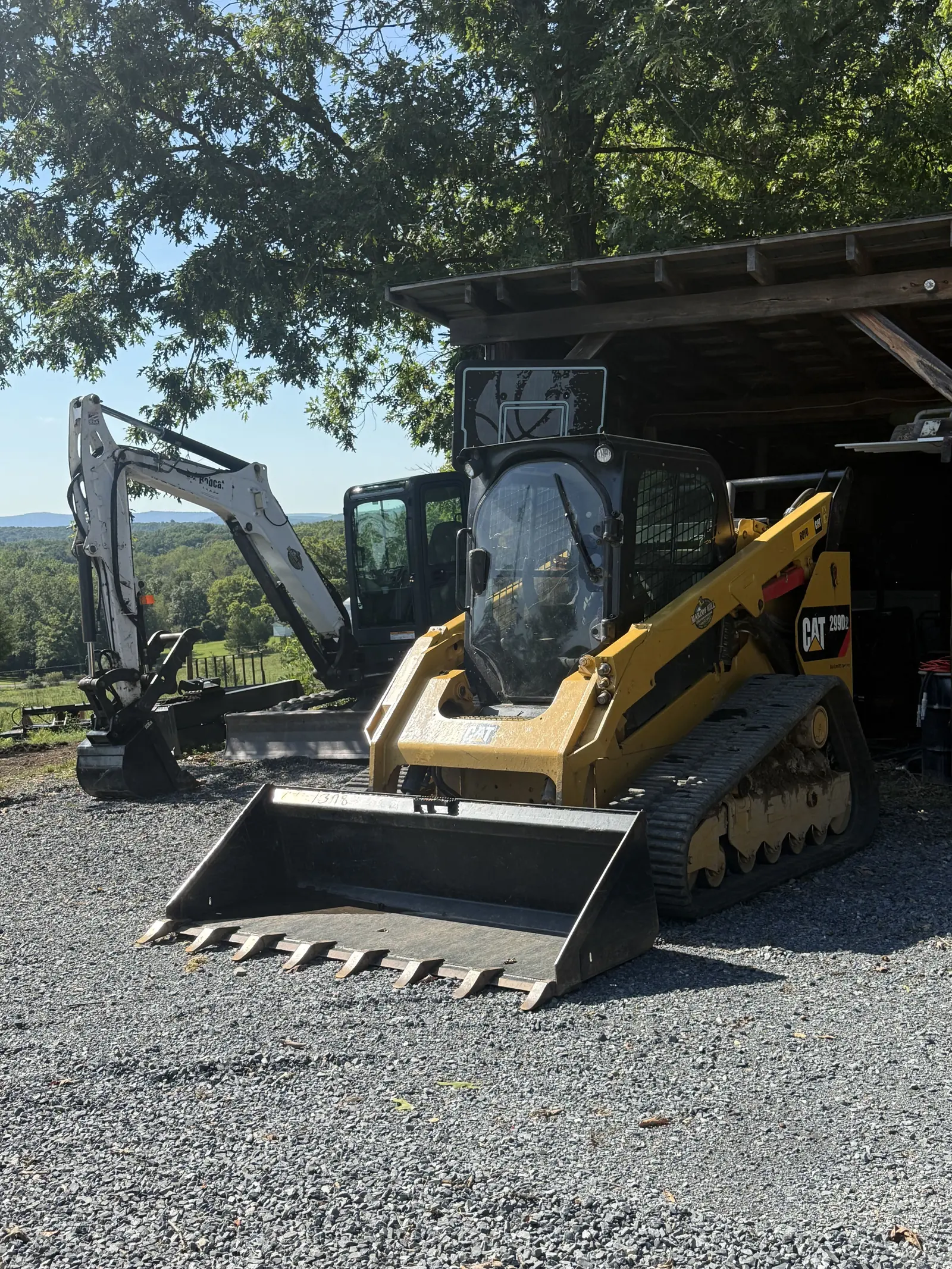
Marloy Hill Enterprise is based in Augusta, in Hampshire County. Our tracked loader carries the mulcher head, and it rides to the job on our own trailer. We mulch across the Eastern Panhandle and the northern Shenandoah Valley. That runs from Romney and Keyser over to Winchester and Front Royal.
Call or text (540) 327-1400 and we will come look at the ground with you.