How Much Does Brush Hogging Cost per Acre in West Virginia?
National cost guides put brush removal at $20 to $200 an acre. Regional farm custom rate surveys land in that same low band for open field mowing. A 2025 Maryland and Delaware Extension survey lists mowing at $13.50 to $200 an acre, with a median of $27.50.
By the hour the surveys agree closely. A 2022 Pennsylvania custom rates report puts brush hogging at $60 to $125 an hour, averaging $92.70. The Maryland and Delaware survey puts the median at $60 an hour.
Heavy brush prices differently. Once a field grows into saplings and thickets, the guides move it out of the mowing column. One national guide puts brush removal at $330 to $630 an acre. The same Extension survey puts land clearing at $150 to $250 an hour.
Every number below comes from a published survey or cost guide. These are market numbers, not our price list. We price brush clearing in Hampshire County after we see the field.
What does bush hogging cost per hour?
Three farm custom rate surveys in this region land close together. The 2022 Pennsylvania report lists brush hogging at $60 to $125 an hour, averaging $92.70. The 2025 Maryland and Delaware Extension survey shows a $60 median and an $84.30 average. A 2016 Shenandoah Valley survey averaged $62.14 an hour.
Hourly pricing is common on brush work for one reason. Nobody can see how thick a field is from the road. An acre of tall weeds cuts in under an hour. An acre packed with woody stems can take most of a day.
| Work | Published range | What moves the number |
|---|---|---|
| Mowing an open field, per acre | $13.50 to $200, median $27.50 | Acres in one place, how long since the last cut |
| Bush hogging, per hour | $60 to $125, average $92.70 | Machine size and how fast it can travel |
| Pasture mowing, per hour, Shenandoah Valley | $35 to $90, average $62.14 | A 2016 survey, so read it as a floor |
| Brush removal, per acre | $20 to $200, or $330 to $630 | What each guide counts as brush |
| Land clearing, per hour | $150 to $250, median $175 | Stem size, slope and rock |
| Forestry mulching, per acre | $400 to $600 | Stems more than a few inches across |
| Stump removal, per stump | $130 to $350 | Trunk size and root spread |
What does an acre cost when the field is still open?
A field that gets cut every year is the cheapest brush hogging there is. A 2010 Shenandoah Valley Extension survey listed bush hogging at $8 to $40 an acre, averaging $18. Current guides run above that. Read the older figure as a floor and the newer ranges as today’s market.
Acreage moves the per acre number more than anything else. A contractor pricing guide lists volume discounts of 10 to 20 percent at five acres and up. One acre behind a house costs more per acre than ten acres in a row.
Getting the machine there costs money too. That same guide puts it at $300 to $800 on clearing work. Most contractors set a minimum so a short job still covers the haul. Ask what the minimum is before you compare two quotes.
Why does the price climb when the brush gets tall?
Price follows hours, and hours follow stem size. A mower moving through knee high grass covers ground fast. The same machine in woody stems slows down, backs up and takes second passes. That is why guides sort brush into light, medium and heavy before they quote anything.
A contractor pricing guide shows the steps clearly. Light brush lands at $500 to $2,000 an acre. Medium brush runs $1,500 to $4,000. Heavy brush runs $3,000 to $6,500.
Ground matters as much as growth. An old field hides rock, groundhog holes and buried stumps. A university small farm guide notes that rotary cutters spend their working lives being bashed off rocks and stumps in old fields. Slower passes cost more.
When is a field too heavy for a bush hog?
A rotary cutter behind a tractor handles grass, weeds and light brush. That same university guide says the blades cut saplings and small trees up to several inches across. Past that size, and on ground a tractor cannot sit level on, the job stops being mowing.
The usual stopping points here are multiflora rose thickets, autumn olive, briars and grown up fence rows. Steep banks, rocky ground and wet spots stop a tractor too. So do old woven wire fences buried in the growth.
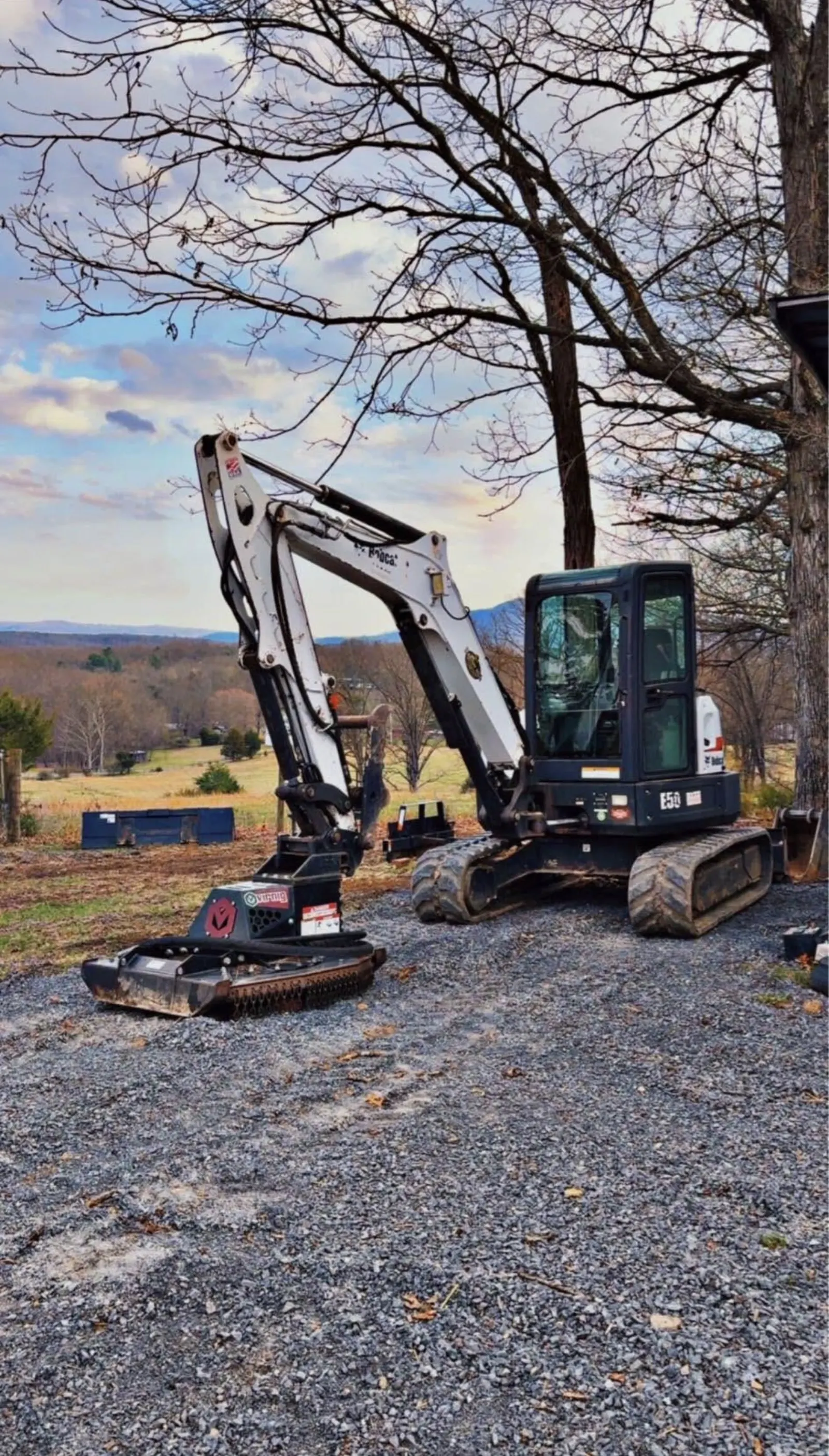
Our setup is a brush cutter on a mini excavator and a mulcher head on a tracked loader. We do not run a tractor and rotary mower. The excavator arm reaches up a bank, over a fence and into a fence row, and the mulcher head grinds stems a mower would leave standing. Each machine rides to the job on our own trailer.
What does heavy brush clearing cost instead?
Once a field is past mowing, the price moves into the clearing column. The 2025 Extension survey lists land clearing at $150 to $250 an hour, with a $175 median. A national guide puts clearing at $120 to $265 an hour. Per acre, light brush clearing starts near $500.
Forestry mulching is the other way to price the same overgrown field. One national guide lists mulching at $400 to $600 an acre. Another puts the average near $450 an acre. The machine grinds standing brush into chips where it stands, so nothing gets piled or hauled off. The full per acre and per hour bands are in forestry mulching prices per acre and per hour in West Virginia.
Forestry mulching fits acreage, trails and the understory under mature timber. We put the two methods side by side in how mulching compares to a full clear.
Stumps price on their own. National guides list stump removal at $130 to $350 per stump. If the ground is getting mowed or seeded afterward, the stumps have to come out first.
How often does a field need brush hogging?
Once a year keeps open pasture open. Killing brush that is already rooted takes more than that. A West Virginia Extension bulletin on autumn olive and multiflora rose reports the highest plant kill at three to six mowings per season, for two to three seasons in a row.
The same bulletin gives the timing. If a single mowing is all you can do in a year, cut in July to early August. Early spring is the second best window.
It also warns that one good year does not hold. Without some retreatment every year, the bulletin says the brush comes back in two or three years and erases the gain. That is why old pasture around here fills in so fast.
How do you get a real number on your field?
A published range shows you the shape of a quote. Your field decides the number. Acres, stem size, slope, rock and how you want the ground left all move it.
We look at the field and tell you what it takes to open it back up. Estimates are free. We cover Hampshire County and the rest of the Eastern Panhandle from our base in Augusta, plus the northern Shenandoah Valley. Call or text (540) 327-1400.