Forestry Mulching vs Land Clearing: Which One Do You Need?
Forestry mulching runs cheaper per acre than a full land clearing job. National cost guides put mulching at roughly $400 to $800 an acre. Heavy growth can push it toward $2,000 an acre. The same guides put traditional land clearing at $1,200 to $8,000 an acre. The gap is not the cutting. It is what happens to the wood after it comes down.
Here is the short rule. Mulch when you want overgrown ground open and usable again. Do a full clear when something is getting built on that spot. Mulching leaves the roots and a chip layer in place. A full clear takes the material off and opens the dirt up.
Every number below comes from published market guides. These are market numbers, not our price list.
What does each method do to the ground?
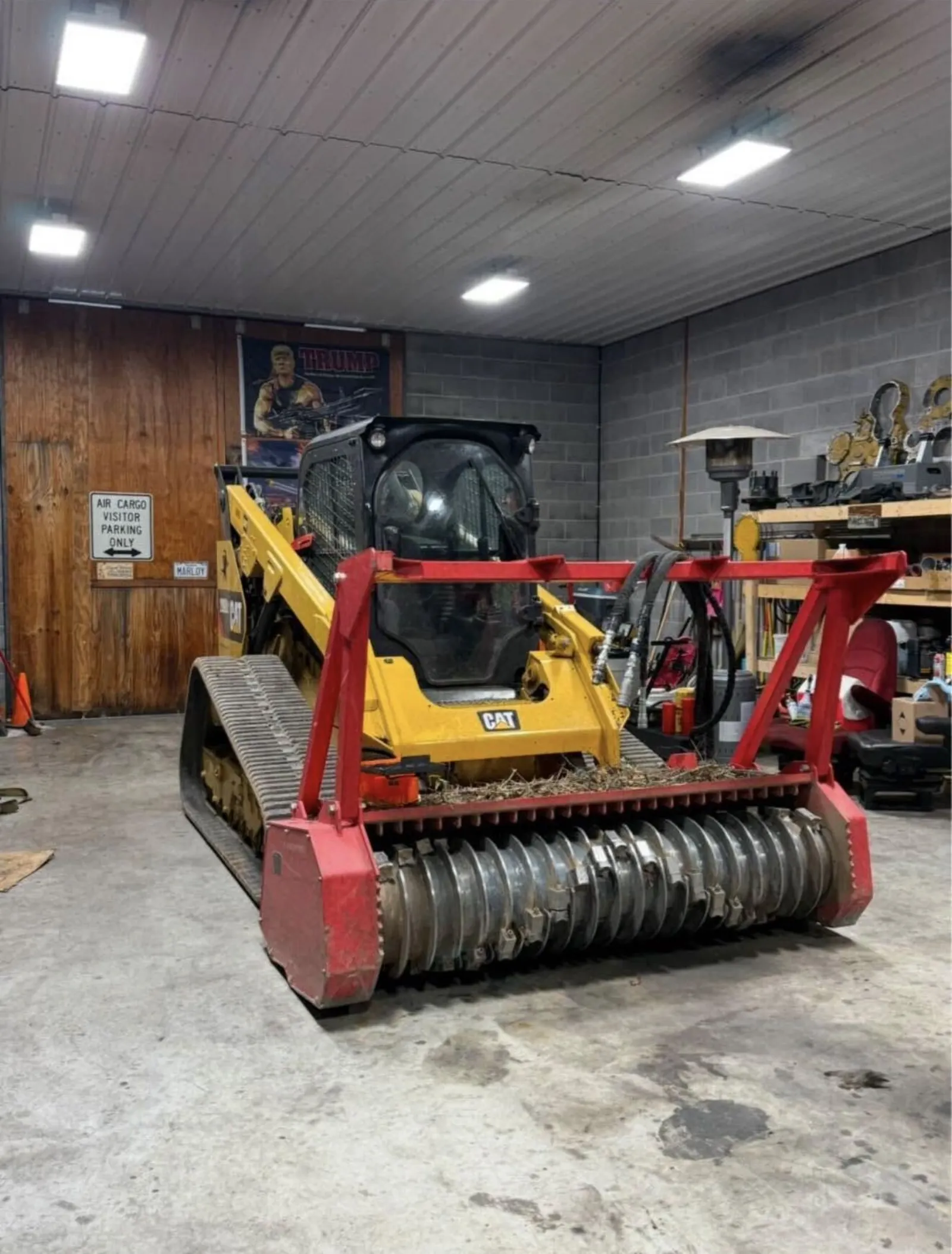
Forestry mulching uses a mulcher head on a tracked machine. The head grinds standing brush, saplings and small trees into chips as the machine drives. The chips fall where the brush stood. Roots stay in the ground and the ground keeps its shape.
Traditional land clearing is a different job. A dozer pushes trees and brush into piles. Stumps and root balls get grubbed out of the dirt. The piles then get burned on site or loaded and hauled away. What is left behind is open soil.
Cost guides describe the split the same way. They say mulching leaves a mulch layer that holds soil and slows weeds back down. They say the dozer method takes out everything above and below ground, and it disturbs the soil a lot.
What does each method cost per acre?
| Method | Published range per acre | What that covers |
|---|---|---|
| Forestry mulching, light to moderate brush | $400 to $800 | Standing brush and saplings ground in place |
| Forestry mulching, heavy overgrowth | Up to $2,000 | Thick stems, slower going, more passes |
| Land clearing, light | $1,200 to $2,500 | Shrubs, underbrush and small trees |
| Land clearing, moderate | $2,500 to $4,500 | Thicker underbrush and medium trees |
| Land clearing, heavy | $4,500 to $8,000 | Dense growth and large trees |
| Brush removal | $800 to $3,000 | Cut brush taken off the ground |
| Stump removal | $100 to $400 per stump | One stump out of the dirt |
Cost guides also list mulching by the hour at about $125 to $300. General clearing labor lands around $110 to $250 an hour. A tracked mulcher covers roughly one to three acres a day in average brush. Most of the price gap between the two methods is debris handling.
What happens to all the brush and wood?
With mulching, the wood stays on your ground as chips. One machine makes the pass and the material is already dealt with.
A full clear has to put the wood somewhere. Cost guides list brush burning at about $20 to $200 an hour of labor. Hauling waste off runs about $130 to $370. A 20 yard dumpster runs about $275 to $700, and a 40 yard dumpster about $350 to $800. Every load is money that mulching skips.
Burning leaves a mark too. The pile sits in one spot, and that ash ring stays bare well into the next season.
Can you burn brush in West Virginia?
Not whenever you want. The West Virginia Division of Forestry sets two forest fire seasons. They run March 1 through May 31, and October 1 through December 31. During those months outdoor burning is legal only between 5 p.m. and 7 a.m. Any fire has to be dead out by 7 a.m.
The rules go further than the clock. A safety strip at least 10 feet wide has to be cleared all the way around the pile. Only vegetative material can go in it. Fines for a forest fire caused by negligence run $100 to $1,000, with a $200 civil penalty on top. A commercial permit from the Division of Forestry is what allows burning during the closed hours.
Add it up and half the year runs on a night schedule. Mulching takes the burn pile out of the plan, so the calendar stops driving the job.
Does clearing bare ground cause problems on a slope?
Hampshire County is ridge and valley country. A lot of the ground sits on a grade. The soils here are shale and clay, and they hold water and wash when they are left bare. The area gets about 35 to 40 inches of rain a year, plus a winter of freeze and thaw.
Bare dirt on a hillside moves in that weather. Mulching leaves a chip layer on top that takes the hit from hard rain. Live roots stay in the ground and keep holding the bank together.
A full clear opens the soil, so the site needs a plan for seeding and erosion control after. Federal stormwater rules call for a construction permit once a site disturbs one acre or more. Smaller pieces of a larger project that adds up to an acre count as well. Check with your county before the machines show up.
What can forestry mulching not do?
Mulching cuts and grinds. It does not dig, and knowing that up front saves a lot of frustration later.
- It does not change grade. A low spot or a side hill stays right where it is.
- It does not pull stumps below grade. Roots and root balls stay in the soil.
- It does not move rock or shift dirt from one place to another.
- Cut stems come back. Multiflora rose and autumn olive both grow again from the root.
That is why cost guides say mulched ground is not ready to build on. For a house pad, a shop or a drive, the stumps have to come out first. That is stump removal work with an excavator, followed by grading and site prep to shape the ground.
Which one fits your job?
Mulching fits when the goal is usable ground. That covers trails and shooting lanes on a hunting tract. Understory cleanup under mature oak and grown up fence rows fit the same way. So does a hillside you want held together. It is also the faster way to take back acreage that filled in over a few seasons.
A full clear fits when the ground is getting used for something new. A cabin, a shop, a home site or a new lane means the stumps and roots have to leave. Open fields and old pasture are usually a brush clearing job with a cutter instead.
Getting a number for your own ground
Published ranges show you the shape of the market. They cannot price your acreage. Density, slope, access and stem size all move the number. Only a look at the ground settles it.
We are based in Augusta, in Hampshire County. We cover the Eastern Panhandle and the northern Shenandoah Valley. Our tracked loader carries a mulcher head for forestry mulching. Our mini excavator carries a brush cutter and a bucket for the digging side. On a full land clearing job we can do both parts on one visit. Call or text (540) 327-1400 for a free estimate.