Excavation
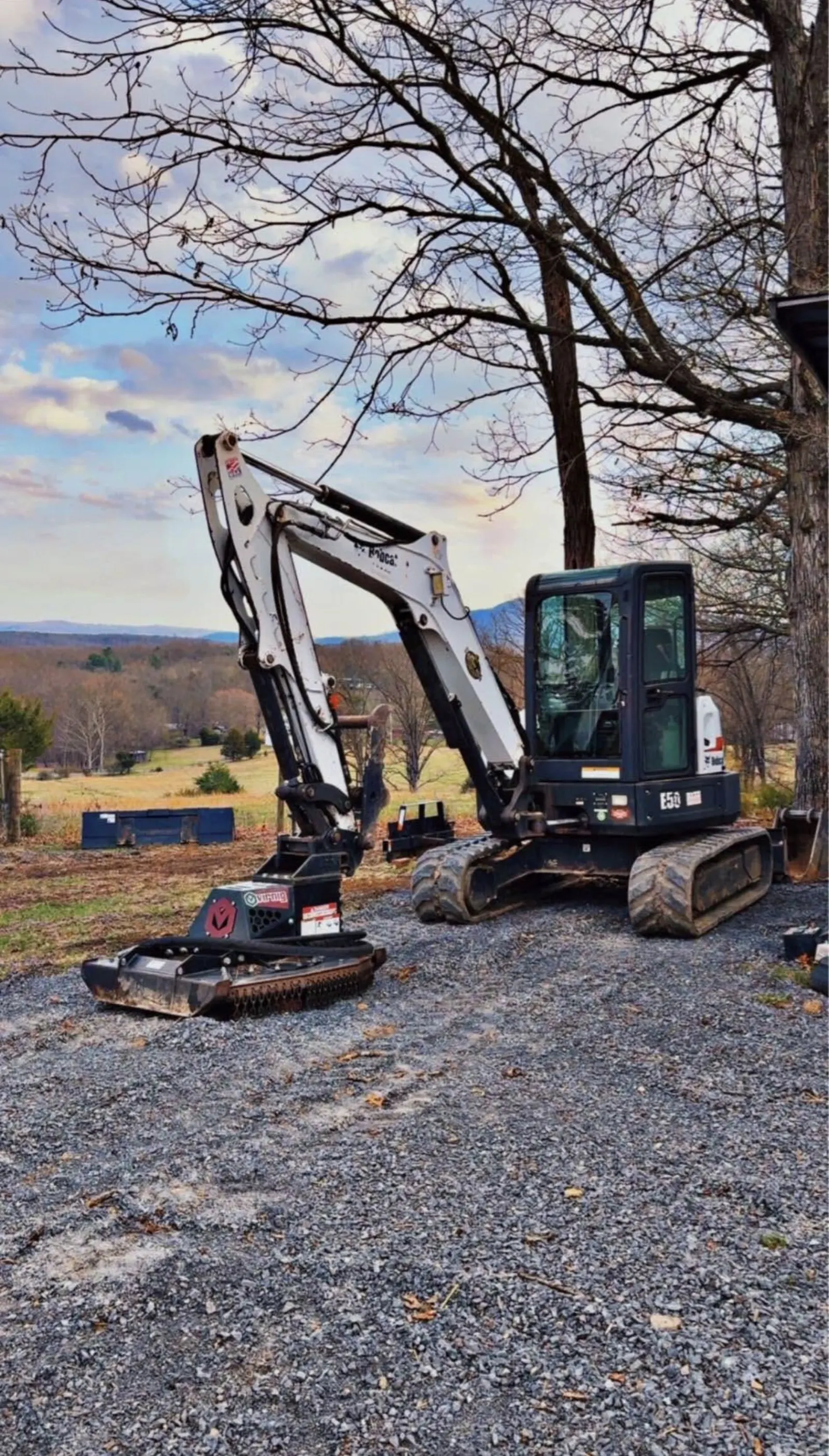
Mini excavator digging for trenches, ditches, driveway cuts and dirt work. We clear and dig on the same trip across Hampshire County and the Eastern Panhandle.
Learn More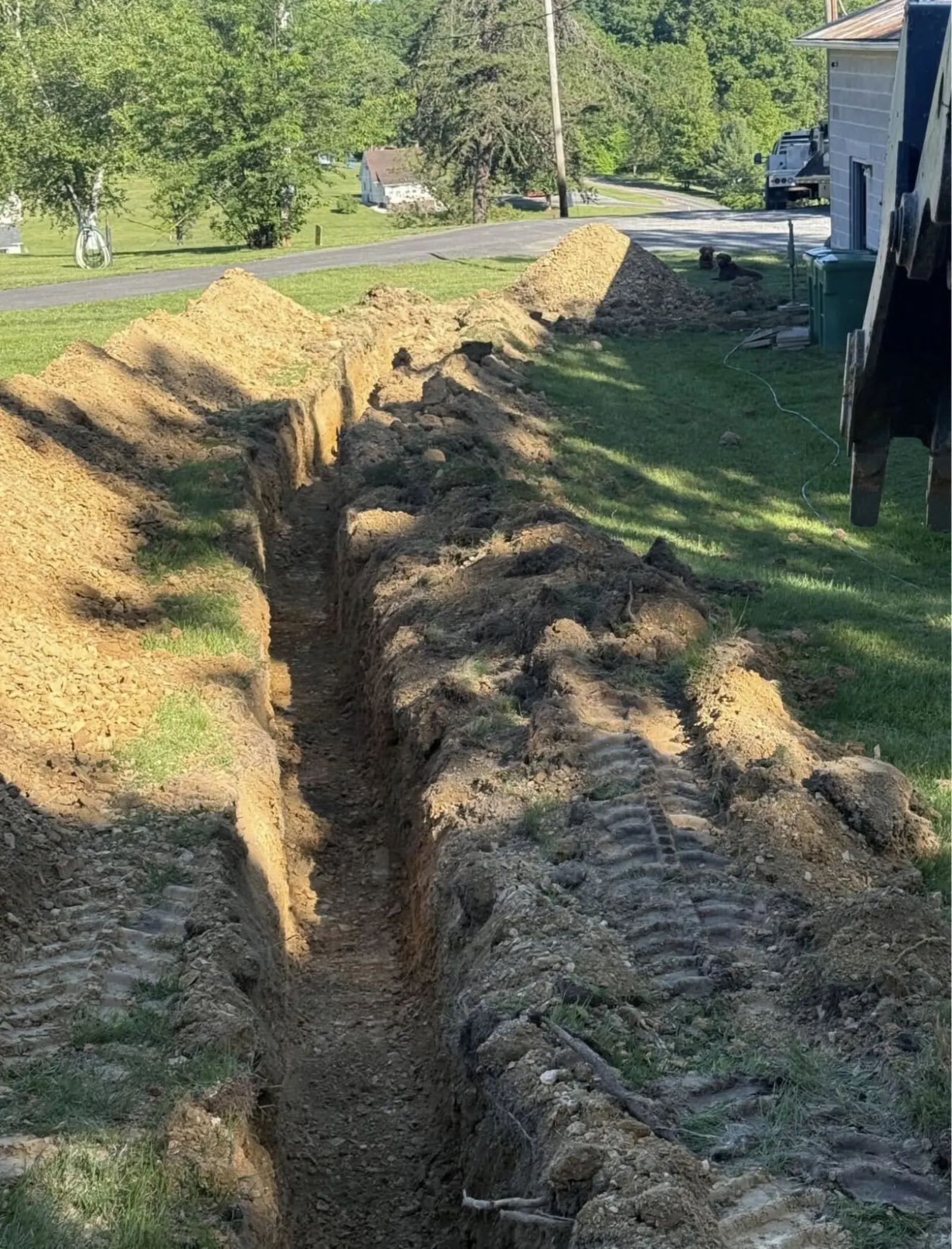
A French drain is a gravel trench with a perforated pipe in the bottom. Water in the ground seeps into the stone, finds the pipe, and runs downhill out of the way. We dig the line with the mini excavator, the same machine that does our dirt work. Washed stone goes in around the pipe, wrapped in non-woven filter fabric so silt stays out of the rock.
Most wet-ground calls around Augusta come down to the same thing. Water is heading toward the building instead of past it. We look at where the water starts and what it takes to move it. Sometimes the answer is a drain line. Sometimes the ground needs grading and shaping first so water sheds on its own.
Tell us about the job and the ground. We will get right back to you.
The first thing we check is fall. A drain line has to run downhill the whole way, at least an inch of drop every eight feet. On flat ground the trench gets deeper as it goes so the pipe holds that slope. Without the fall, water sits in the pipe and the drain quits working.
Most yard lines run 18 to 24 inches deep and about a foot wide. A shallow trench in tight ground fills up fast, so we go deeper. Perforated pipe collects water in the wet section. Where the line only has to move water, we switch to solid pipe.
The end of the line matters as much as the trench. We daylight it downhill at a spot where the water can spread out and soak in. On flatter lots the pipe ends at a pop-up emitter that opens under pressure and shuts after. Topsoil goes back over the stone where the line crosses lawn.
Ground in Hampshire County is shale and clay sitting on rock. Rain soaks in until it hits a tight layer, then runs sideways along it. That is why a hillside above a house pushes water out of the bank in spring. It shows up as a seep, or a strip of yard that never dries.
The fix is a trench cut across the slope above the wet area. It picks up water moving through the ground and turns it around the building. Down at the low point, a catch basin and a drain line pull off water that stands after a storm. The basin holds leaves and dirt out of the pipe.
That water has to end up somewhere real. West Virginia uses a reasonable use rule for surface water. Pushing it onto the next property can turn into a legal fight. We set the outlet on your own ground, back from the property line.
Gutters drop a lot of water in one place. Residential code calls for the ground to fall six inches in the first ten feet away from a house. Plenty of older places here do not have that. We bury the downspout lines and carry roof water out away from the wall.
Ten feet is a starting point for that outlet. On a slope it usually has to go farther before the water is gone. The pipe sits deep enough to mow over and is pitched so it drains empty. Cabins and barns with no gutters get a shallow trench along the drip line instead.
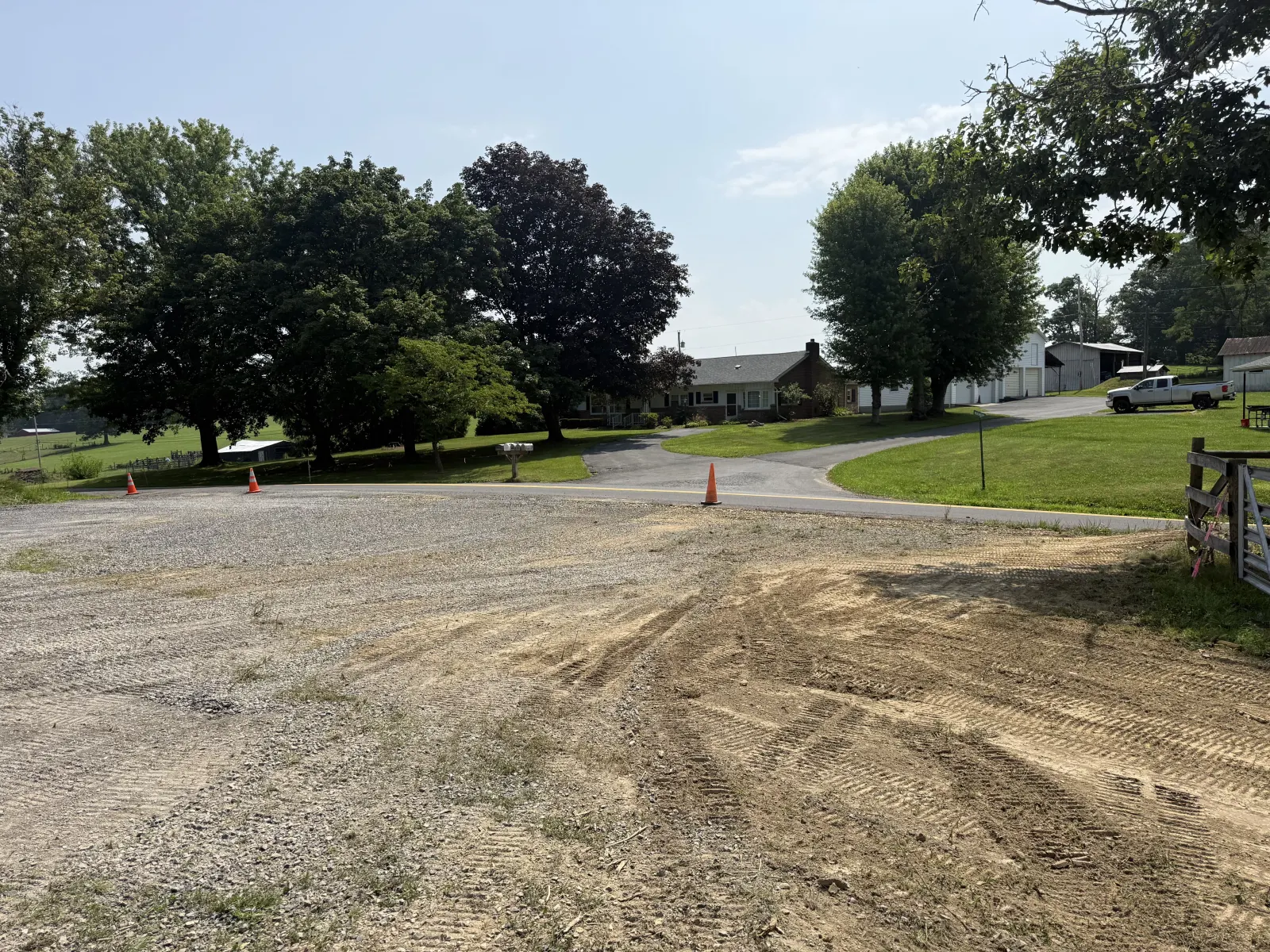
Driveways collect water too. A drive running downhill turns into a creek and cuts ruts in a heavy rain. A trench across it, or a drain line on the low side, takes that water off before it moves gravel. When the surface is already washed out, gravel drive repair goes in with the drainage work.
Free, no-obligation estimates across the Eastern Panhandle and the northern Shenandoah Valley.
(540) 327-1400From the first call or text to the finished property, here is how it goes.
Call or text (540) 327-1400 and tell us what the property looks like. Photos and a map pin help us picture the ground before we drive out.
We meet you at the property and go over what you want done. We check the slope, the wet spots, the trailer access, and what has to come down.
We give you a price for the work you asked about. The job goes on the schedule once you approve it.
The loader and the excavator come in on our trailer. Clearing, stump work and grading happen on the same job when the ground allows.
Before the machines load up, we go over the finished ground with you. You see the grade and where the chips and dirt ended up.
Common questions about drainage across the Eastern Panhandle and the northern Shenandoah Valley. If yours is not here, call or text and ask.
Mini excavator digging for trenches, ditches, driveway cuts and dirt work. We clear and dig on the same trip across Hampshire County and the Eastern Panhandle.
Learn More We level pads, smooth rutted ground and shape lots after clearing. The finished grade sends water away from your buildings instead of toward them.
Learn More We cut in new gravel driveways and lanes on rural lots, and regrade drives that have rutted or washed out. The surface gets crowned so water runs off the drive instead of down it.
Learn MoreWe work out of Augusta, on US-50 between Romney and the Virginia line. That means ridge ground, shale and clay soil, grown-up fence rows, and old pasture growing back in.
A tracked loader with a mulcher head clears standing growth, and a mini excavator does the digging. Tracks spread the weight on soft ground and hold better on slopes than wheels.
We come out, look at the property with you, and price the work. The estimate costs nothing and gives you a number before any machine shows up.
We cover Hampshire, Mineral, Hardy, Grant, Morgan and Berkeley counties in West Virginia. East of the line we reach Winchester and Front Royal, roughly 50 miles from Augusta.
Tell us where the property is and what you want the ground to do. Call or text (540) 327-1400, or fill in the form and we will get back to you.
Tell us about the job and the ground. We will get right back to you.