Forestry Mulching
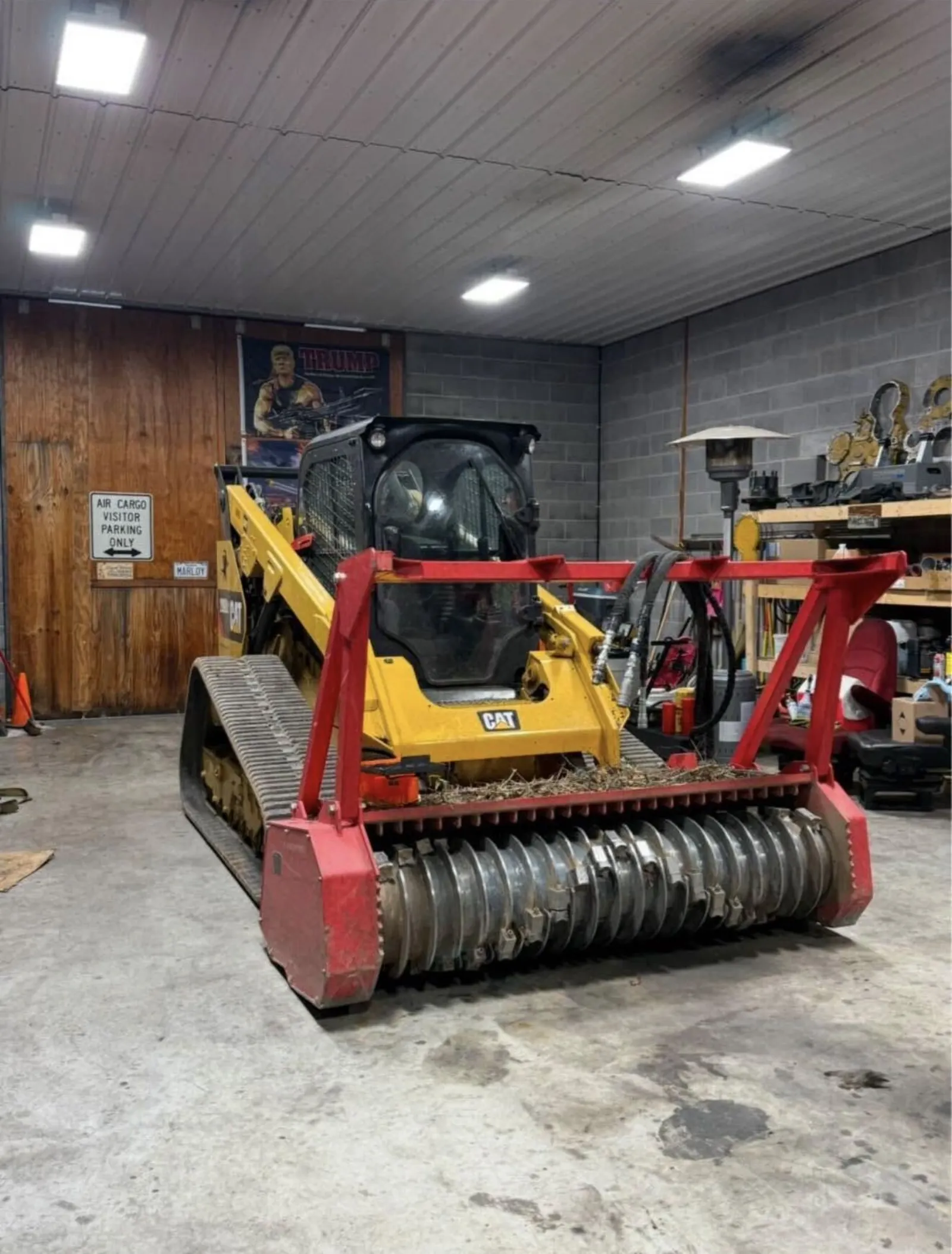
We grind standing brush, saplings and small trees into mulch with a mulcher head on our tracked loader. The chips stay on the ground and hold the soil in place.
Learn More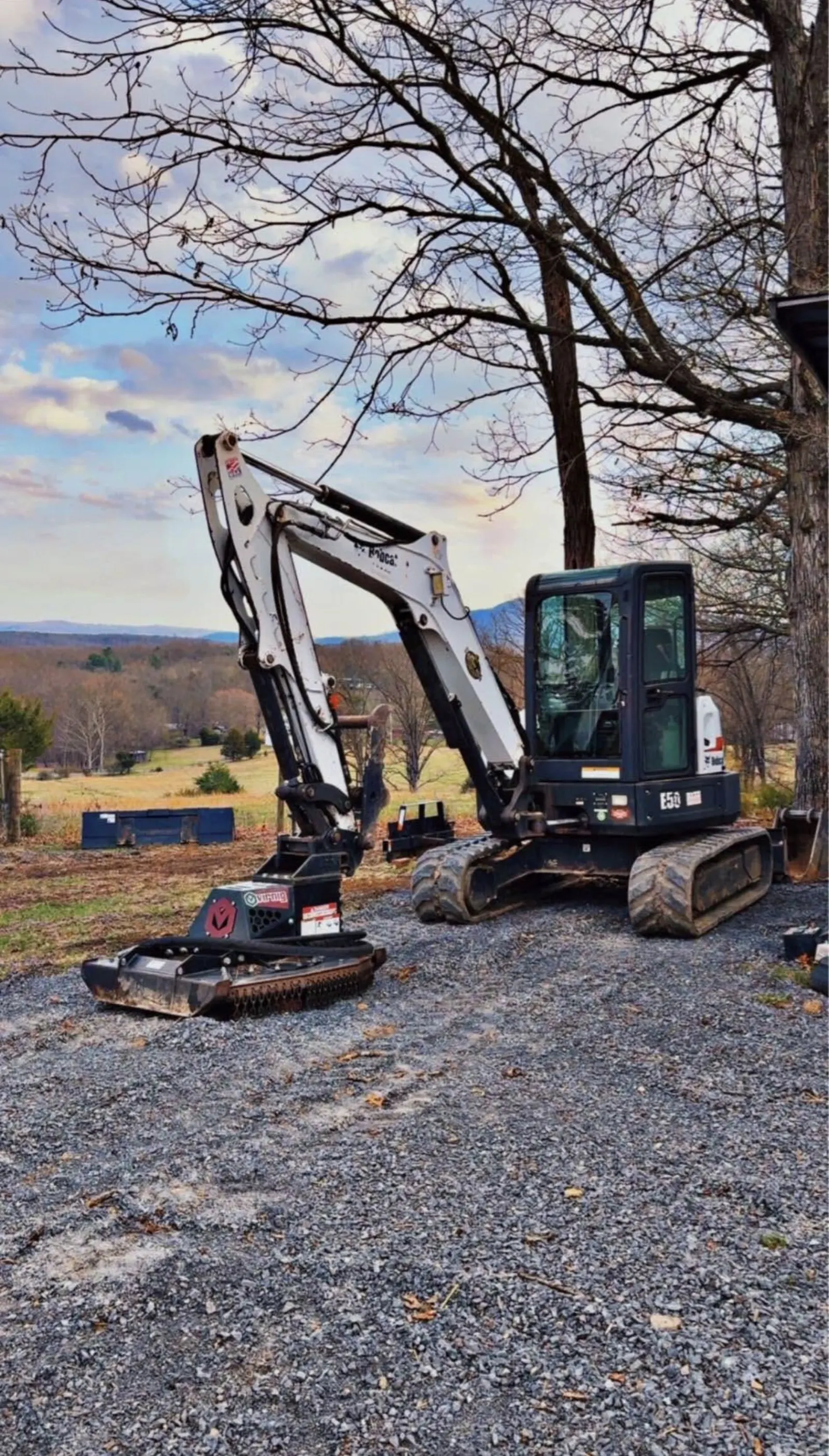
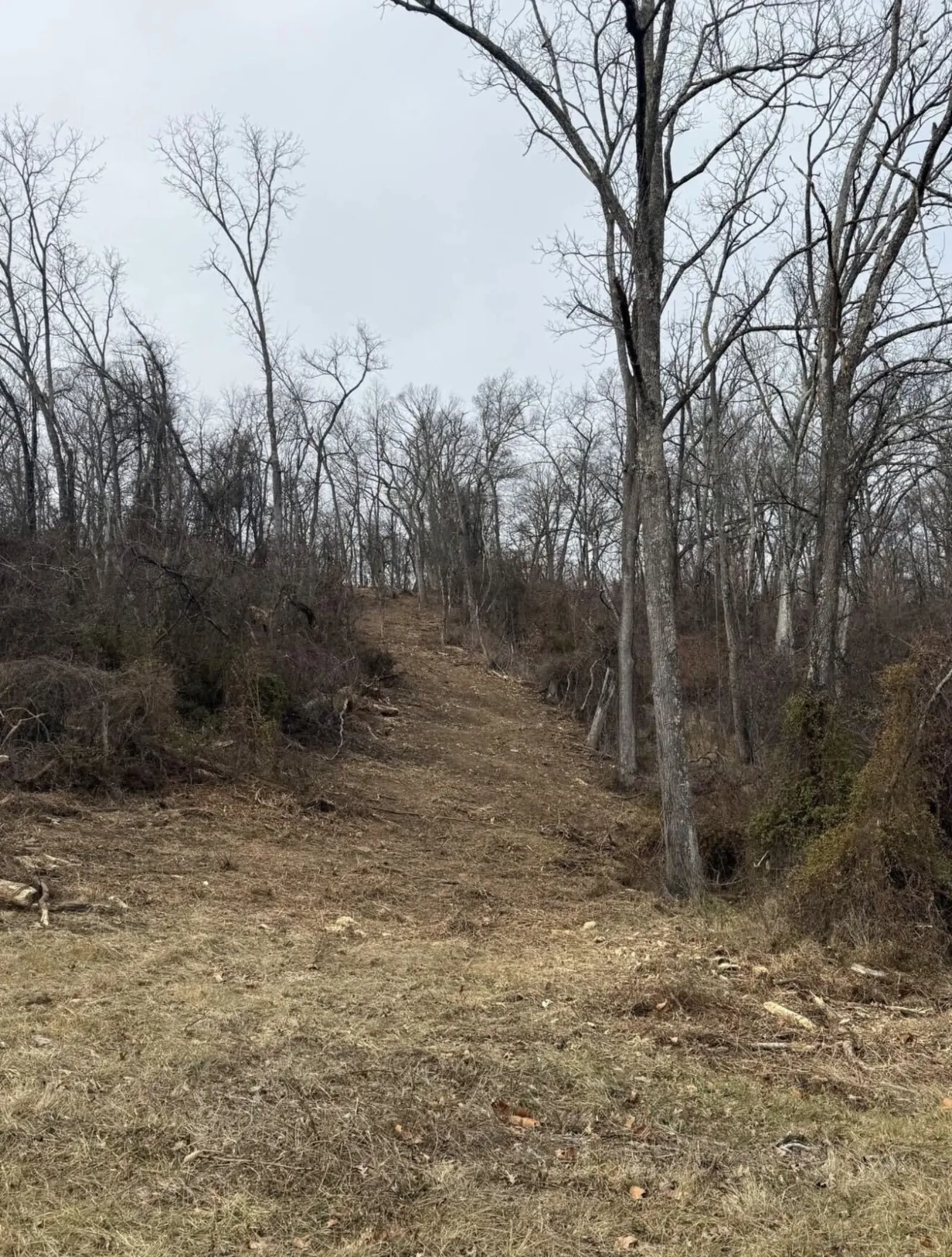
Brush hogging turns an overgrown field back into ground you can use. In Hampshire County, open land fills in fast. Briars, multiflora rose, autumn olive and locust sprouts take an old pasture in a few seasons. We cut that growth back down to the ground.
We are based in Augusta, in Hampshire County, and cut brush across the Eastern Panhandle. Most of the work is grown-up lots, old pasture and fence rows on farms. The cutting is done with a brush cutter on our mini excavator. The machine sits on firm ground and reaches out to the brush.
Tell us about the job and the ground. We will get right back to you.
Old pasture goes back to brush once the mowing stops. Briars and tall weeds come first. Then multiflora rose and autumn olive move in, dropped by birds that eat the fruit. In a few seasons the field is a thicket you cannot get a mower into.
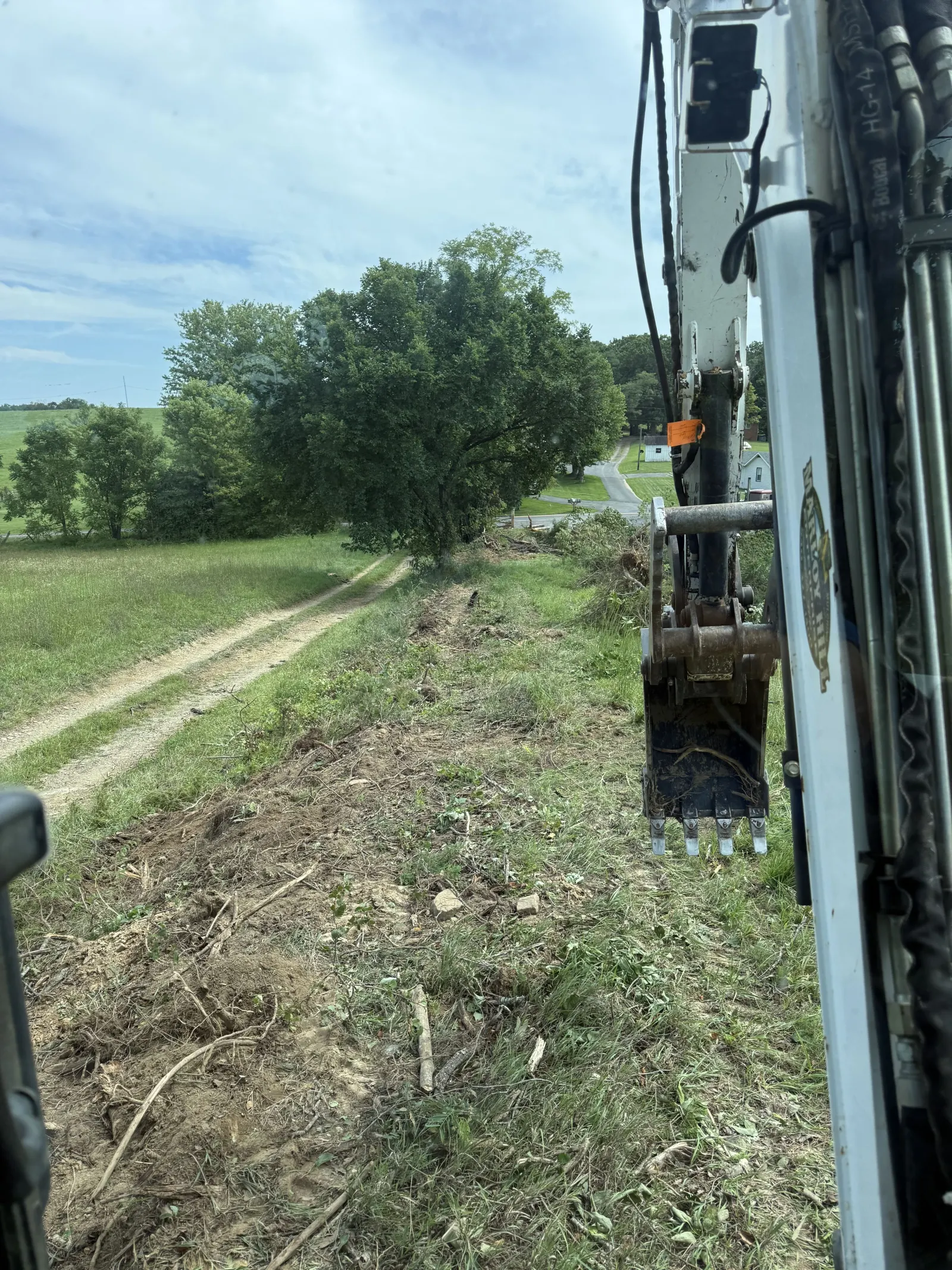
We cut all of it down, including woody stems too big for a farm mower. The field opens back up. You can see the fence, the rocks, the wet spots and the ground itself. From there it can be mowed, seeded or grazed.
Multiflora rose and autumn olive both come back from the roots after one cutting. Extension guides say so plainly. Locust does the same and sprouts from the stump and the roots. The first cut opens a field up, and a cut every year or two keeps it open.
A lot of brush around here grows on ground a tractor cannot safely sit on. Road banks, ditch lines and the steep side of a field are the usual spots. Driving across a steep slope raises the risk of an overturn. The shoulder of a ditch can also give way after wet weather or a hard freeze and thaw.
The brush cutter on the mini excavator comes at that ground from the other side. The machine parks on firm, level footing and the arm reaches out. It cuts down a bank, into a ditch line or over a fence. The wire and posts stay up, and the machine stays on ground that holds it.
Reach helps on rocky ground too. Ledge rock, old wire, stumps and groundhog holes hide under tall brush. The arm can cut over all of it while the machine stays where the footing is good.
Overgrown property cleanup starts with what the ground is for. A hay field gets cut and left alone. A lot going up for sale gets cut so buyers can see the boundaries and the lay of the land. A house site or a shed pad needs more than a cut.
Cutting knocks the brush down and leaves the roots in the ground. Grinding standing brush into a chip layer instead is forestry mulching, done with the mulcher head on our tracked loader. On ground that has to be dug or built on, the roots come out too. Pulling them with the excavator bucket is stump removal.
Cut brush stays on the property. It lies where it falls and breaks down over a season or two. If you would rather have it in one spot, we can push it into a pile. Where the cut turns up ruts or ground that needs shaping, that part is grading and site prep.
Free, no-obligation estimates across the Eastern Panhandle and the northern Shenandoah Valley.
(540) 327-1400From the first call or text to the finished property, here is how it goes.
Call or text (540) 327-1400 and tell us what the property looks like. Photos and a map pin help us picture the ground before we drive out.
We meet you at the property and go over what you want done. We check the slope, the wet spots, the trailer access, and what has to come down.
We give you a price for the work you asked about. The job goes on the schedule once you approve it.
The loader and the excavator come in on our trailer. Clearing, stump work and grading happen on the same job when the ground allows.
Before the machines load up, we go over the finished ground with you. You see the grade and where the chips and dirt ended up.
Common questions about brush clearing across the Eastern Panhandle and the northern Shenandoah Valley. If yours is not here, call or text and ask.
We grind standing brush, saplings and small trees into mulch with a mulcher head on our tracked loader. The chips stay on the ground and hold the soil in place.
Learn More We clear grown up fence rows and property lines on farms and acreage across Hampshire County. The row comes back to a clean line your fence crew can work from.
Learn More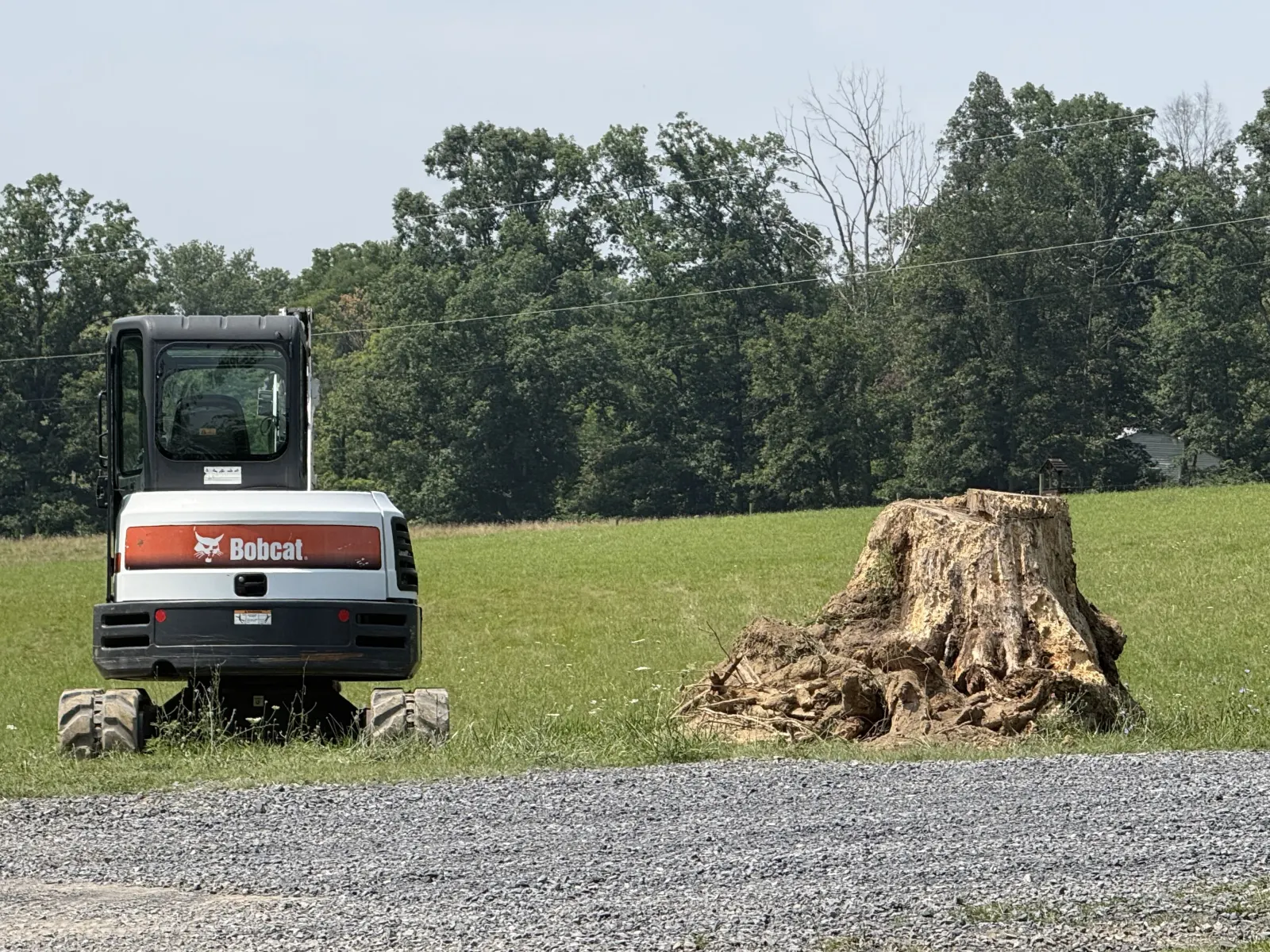
We dig stumps out with a mini excavator, root ball and all. The hole gets backfilled and bladed level so the spot can be mowed or built on.
Learn MoreWe work out of Augusta, on US-50 between Romney and the Virginia line. That means ridge ground, shale and clay soil, grown-up fence rows, and old pasture growing back in.
A tracked loader with a mulcher head clears standing growth, and a mini excavator does the digging. Tracks spread the weight on soft ground and hold better on slopes than wheels.
We come out, look at the property with you, and price the work. The estimate costs nothing and gives you a number before any machine shows up.
We cover Hampshire, Mineral, Hardy, Grant, Morgan and Berkeley counties in West Virginia. East of the line we reach Winchester and Front Royal, roughly 50 miles from Augusta.
Tell us where the property is and what you want the ground to do. Call or text (540) 327-1400, or fill in the form and we will get back to you.
Tell us about the job and the ground. We will get right back to you.