Excavation
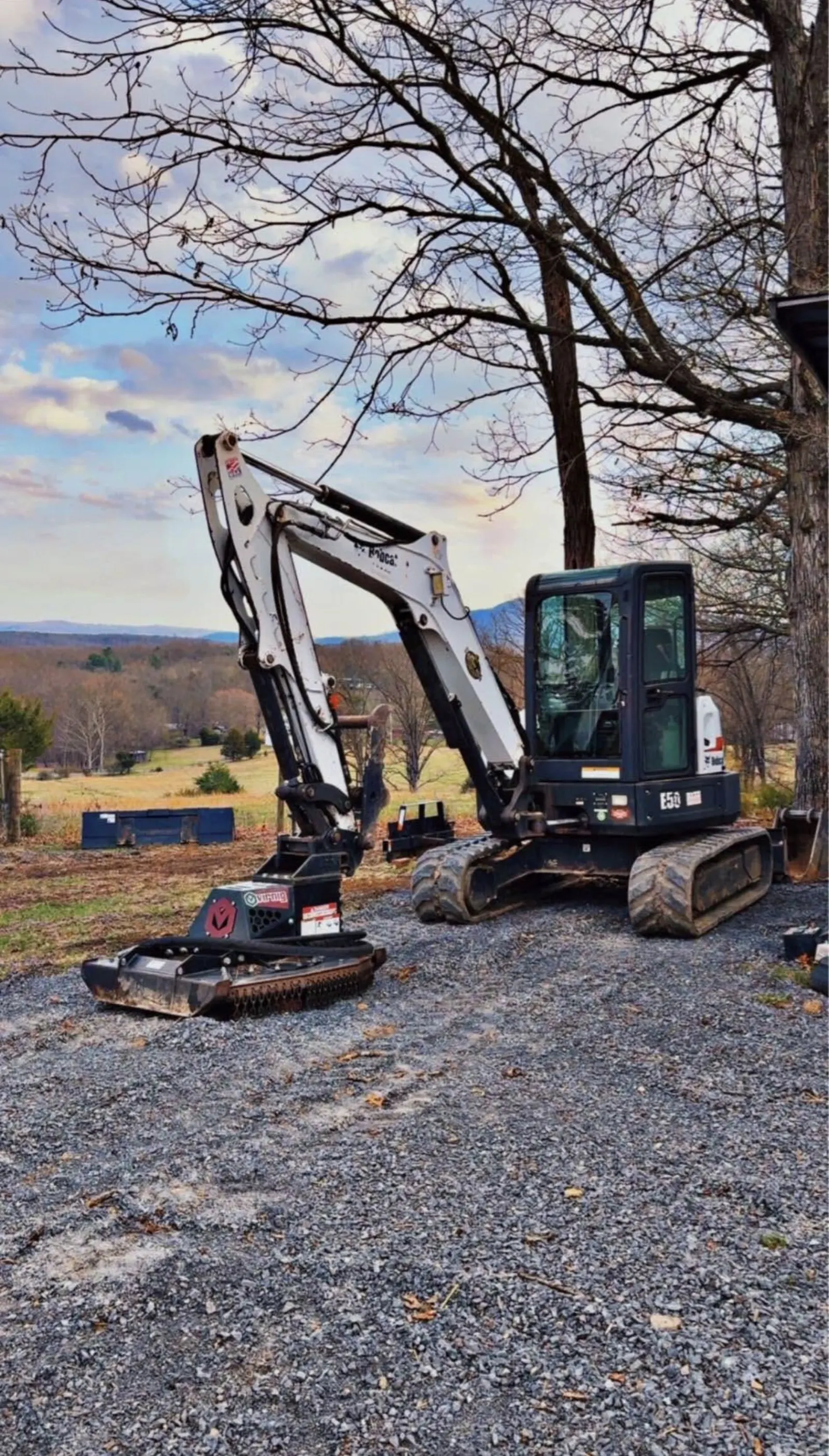
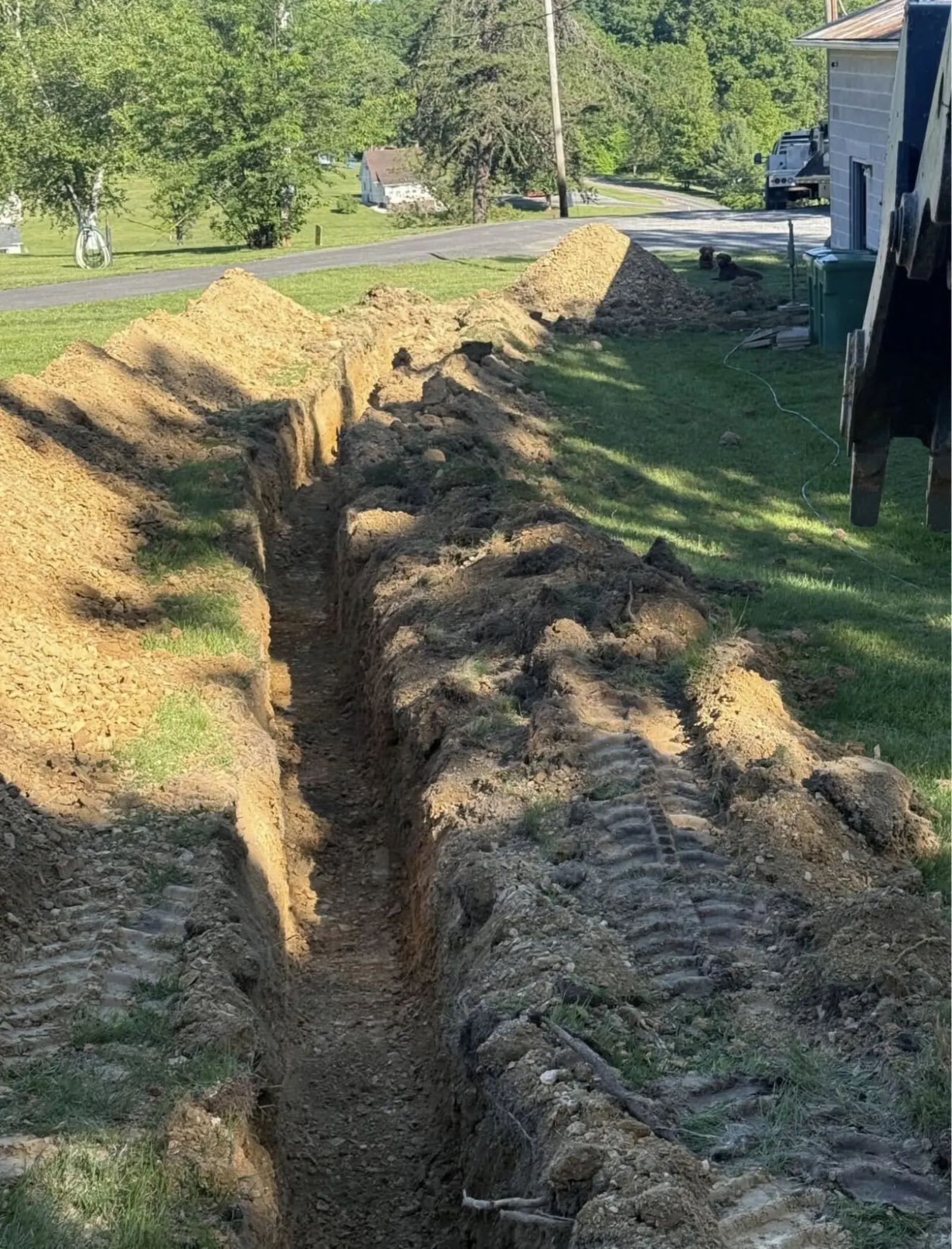
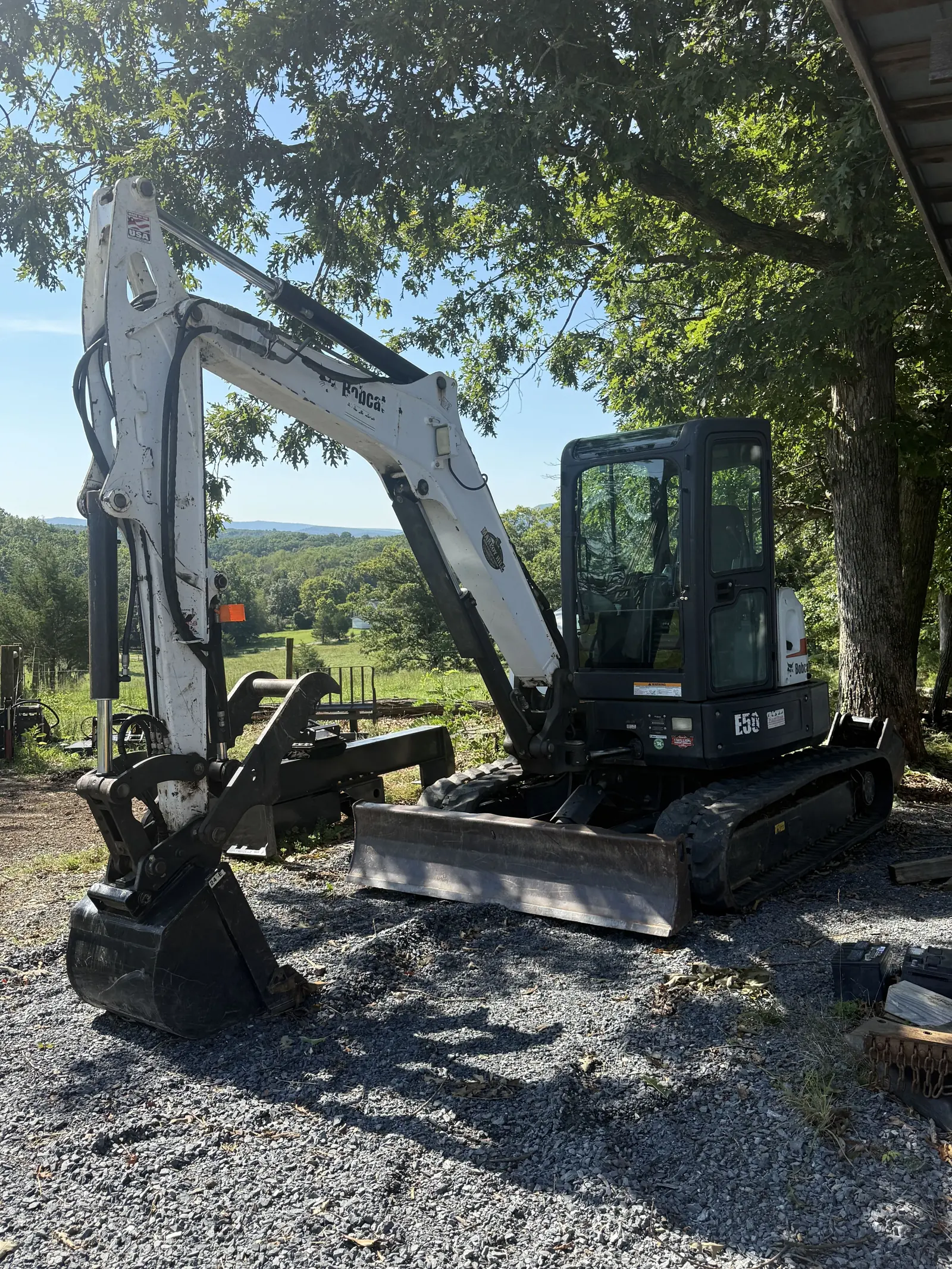
Mini excavator digging for trenches, ditches, driveway cuts and dirt work. We clear and dig on the same trip across Hampshire County and the Eastern Panhandle.
Learn More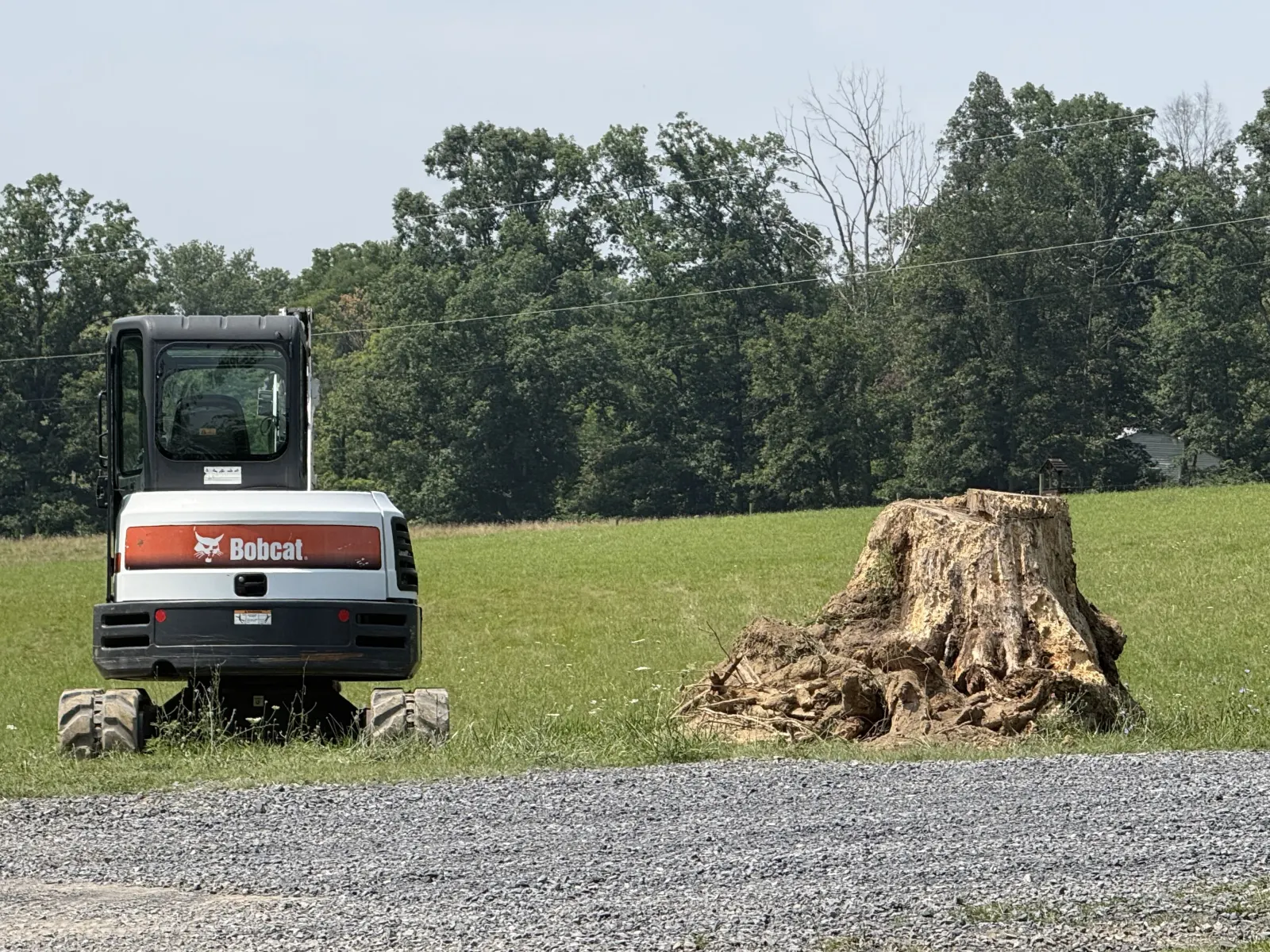
Stump removal is the job left over after the trees come down. Maybe you had land clearing done, or a tree service took a few big ones out of the yard. The trunks are gone and the stumps are still sitting in the ground. We dig them out with a mini excavator, roots and all.
We do not run a stump grinder. A grinder chews the stump down a few inches and leaves the roots in the ground. Our machine digs around the stump, cuts the roots, and lifts the whole root ball out. Then the hole gets filled back in and leveled off.
Tell us about the job and the ground. We will get right back to you.
Stump grinding uses a spinning wheel with teeth. It chews the wood down a few inches below the surface, usually 4 to 12 inches. The stump is out of sight and the roots are still in the ground. Over the next several years those roots rot and the ground over them dips.
Digging is a different job. We open the ground around the stump, cut the big roots, and lift the root ball out. Oak roots run wide and close to the surface. Hickory drives a taproot straight down, so those stumps take a deeper dig.
What fills the hole is the other difference. Grinding packs the hole with wood chips from the stump. We put the dirt back in, so the spot ends up as soil you can seed or build on.
Anything you build on needs ground that will not move. Building codes call for stumps and roots to come out from under a building. Buried wood rots, leaves a gap, and the ground above it drops. So the stumps come out of a pad area before grading and site prep starts.
A gravel driveway has the same problem. A stump left under the gravel rots out and the drive sinks in that spot. Water then stands in the dip and cuts a rut down the lane.
Trench work is the third case. A French drain has to run at a steady grade in an open trench. Big roots in the path get dug out first so the pipe lays right.
A stump leaves a bigger hole than most people expect. The roots pull dirt up with them, and the root ball takes up its own space. We push the dirt back in, pack it down, and blade the spot level.
Backfill settles. Our shale and clay ground holds water, and a freeze and thaw winter works loose dirt down. We leave the fill a little high so it settles close to flat. Look at the spot the next spring and add dirt if it dropped.
The stumps stay on your property. We stack them where you point, clear of the mowing. Burning them means following the West Virginia fire seasons, March 1 to May 31 and October 1 to December 31. In those seasons burning is allowed only from 5 p.m. to 7 a.m., with the fire out by 7 a.m.
Free, no-obligation estimates across the Eastern Panhandle and the northern Shenandoah Valley.
(540) 327-1400From the first call or text to the finished property, here is how it goes.
Call or text (540) 327-1400 and tell us what the property looks like. Photos and a map pin help us picture the ground before we drive out.
We meet you at the property and go over what you want done. We check the slope, the wet spots, the trailer access, and what has to come down.
We give you a price for the work you asked about. The job goes on the schedule once you approve it.
The loader and the excavator come in on our trailer. Clearing, stump work and grading happen on the same job when the ground allows.
Before the machines load up, we go over the finished ground with you. You see the grade and where the chips and dirt ended up.
Common questions about stump removal across the Eastern Panhandle and the northern Shenandoah Valley. If yours is not here, call or text and ask.
Mini excavator digging for trenches, ditches, driveway cuts and dirt work. We clear and dig on the same trip across Hampshire County and the Eastern Panhandle.
Learn More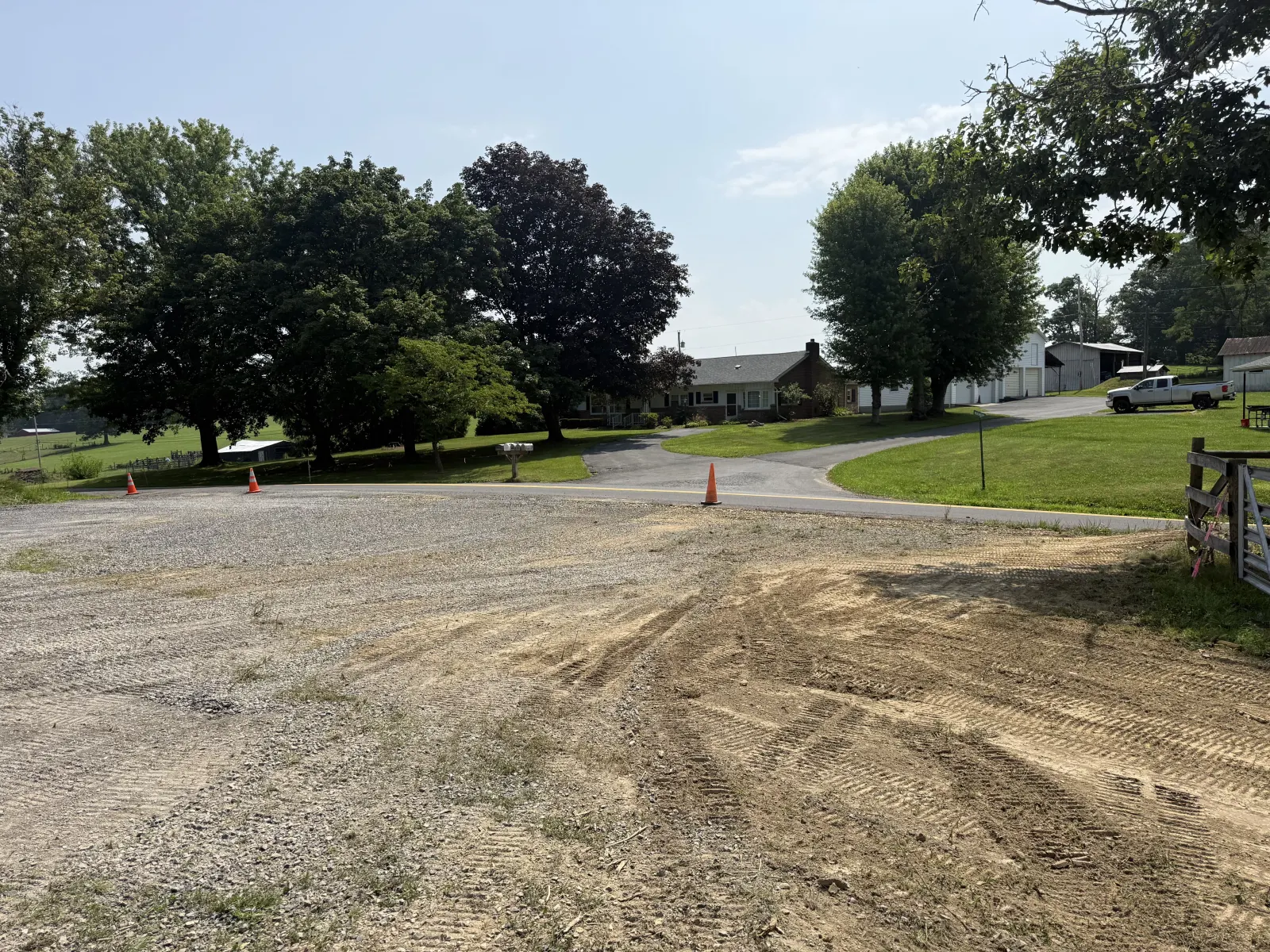
We level pads, smooth rutted ground and shape lots after clearing. The finished grade sends water away from your buildings instead of toward them.
Learn More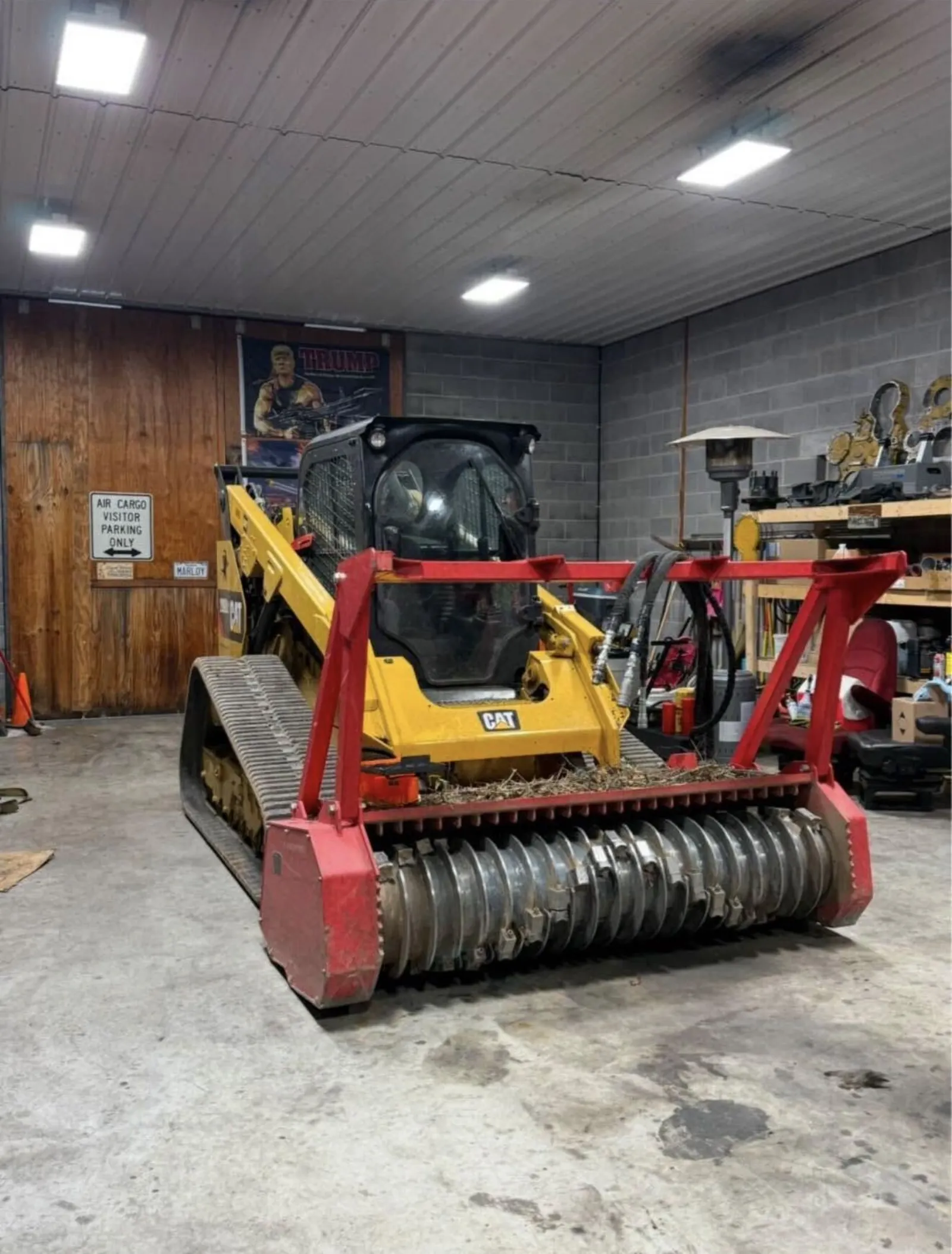
We grind standing brush, saplings and small trees into mulch with a mulcher head on our tracked loader. The chips stay on the ground and hold the soil in place.
Learn MoreWe work out of Augusta, on US-50 between Romney and the Virginia line. That means ridge ground, shale and clay soil, grown-up fence rows, and old pasture growing back in.
A tracked loader with a mulcher head clears standing growth, and a mini excavator does the digging. Tracks spread the weight on soft ground and hold better on slopes than wheels.
We come out, look at the property with you, and price the work. The estimate costs nothing and gives you a number before any machine shows up.
We cover Hampshire, Mineral, Hardy, Grant, Morgan and Berkeley counties in West Virginia. East of the line we reach Winchester and Front Royal, roughly 50 miles from Augusta.
Tell us where the property is and what you want the ground to do. Call or text (540) 327-1400, or fill in the form and we will get back to you.
Tell us about the job and the ground. We will get right back to you.