Brush Clearing
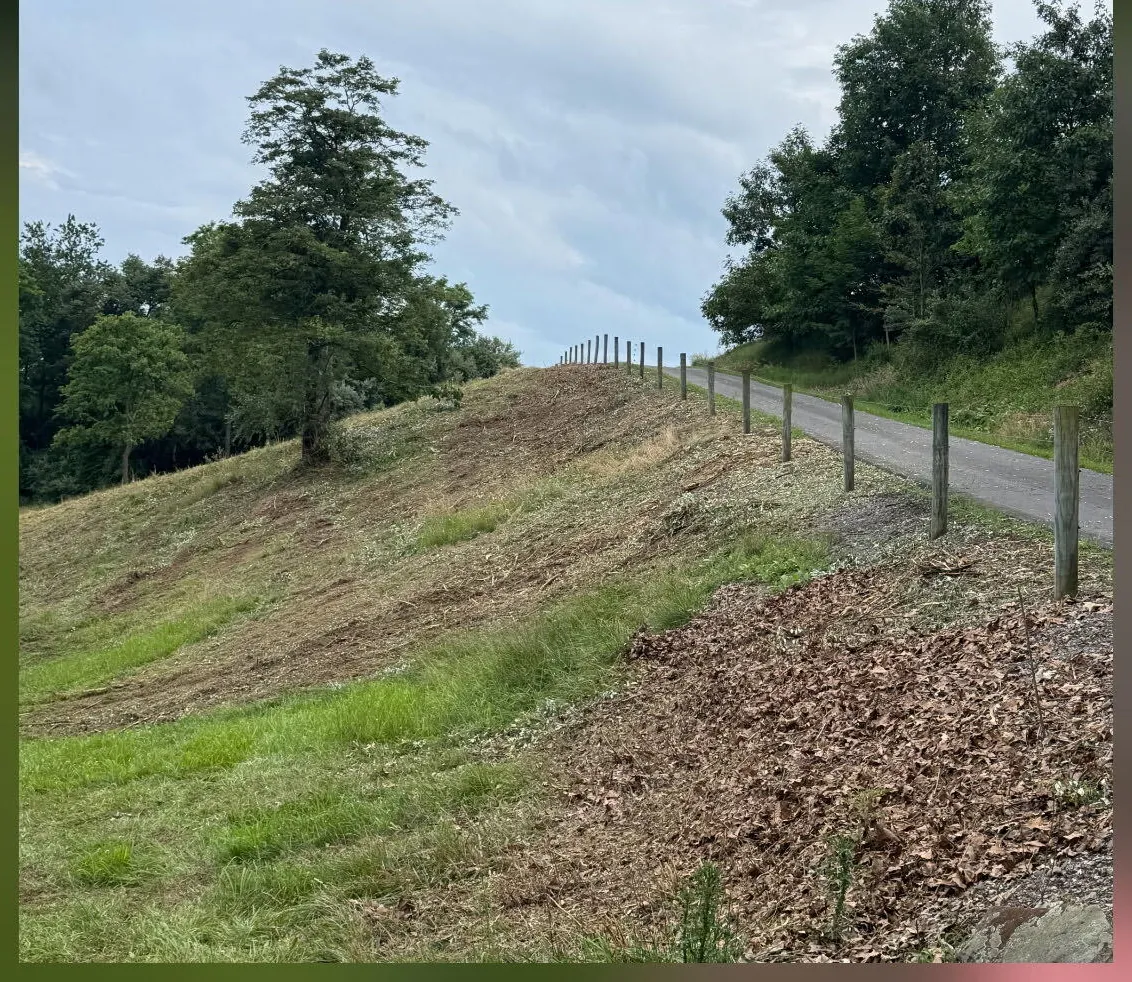
We cut overgrown fields, pastures and fence rows back down to open ground. A brush cutter on the mini excavator reaches banks, ditch lines and fence rows from level footing.
Learn More Fence line clearing opens a fence row that has grown shut. Briars, multiflora rose, autumn olive and grapevine fill a line in a few seasons. Saplings come up on both sides until the wire disappears. We cut the row back to a clean line, the same as brush clearing but on a narrow strip.
We are based in Augusta, in Hampshire County, and cover the Eastern Panhandle and the northern Shenandoah Valley. A tracked loader with a mulcher head grinds the row down where it stands. A mini excavator with a brush cutter reaches over standing fence and up banks a tractor cannot hold. Call or text (540) 327-1400 and we will come look at the line.
Tell us about the job and the ground. We will get right back to you.
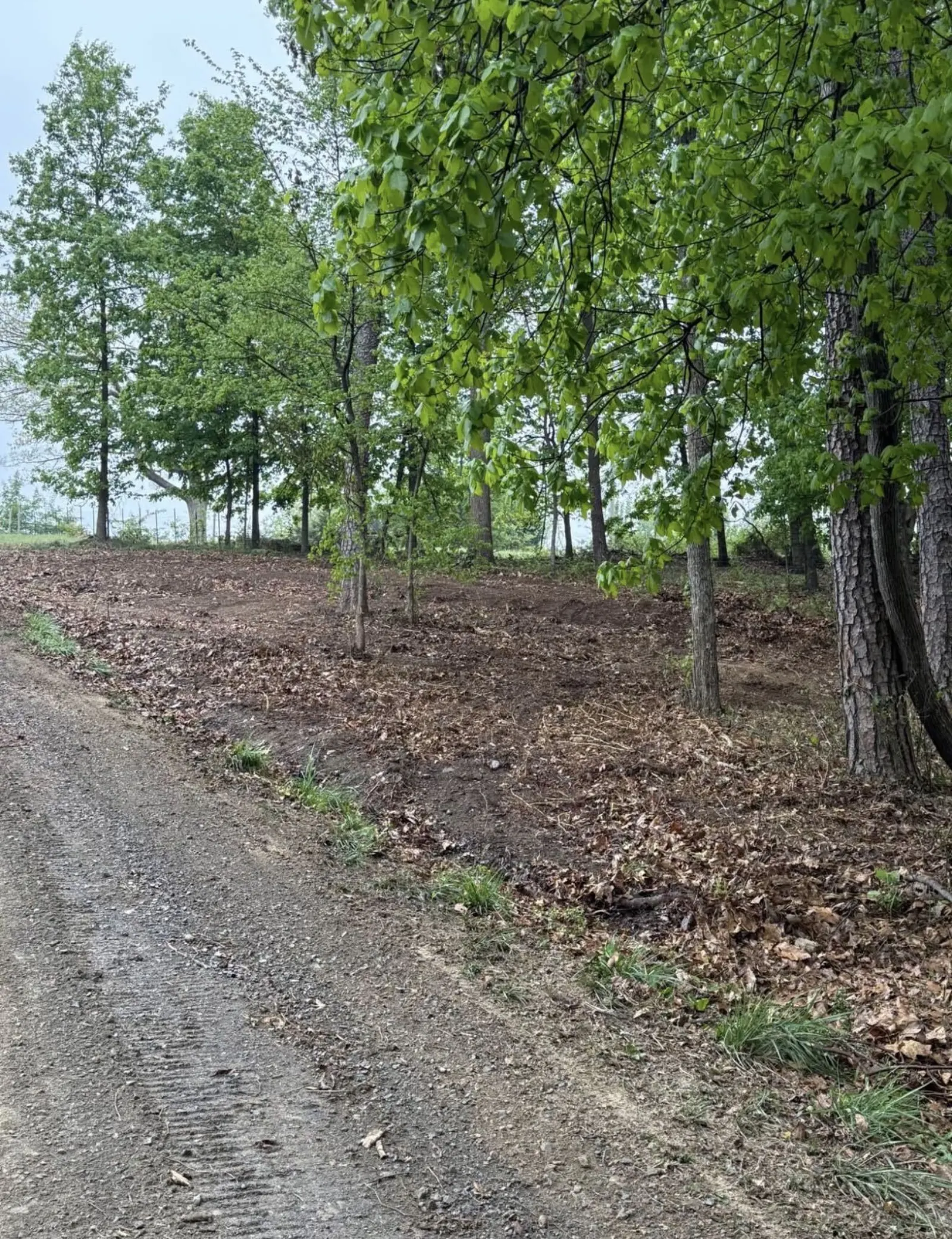
A fence row goes quiet for two or three seasons and then it is a wall. The brush fills in under the wire and saplings push up through the middle. By then the corner posts are buried and the wire is carrying the load. On a farm, the row often gets cleared along with the fields as part of one land clearing job.
Multiflora rose is the worst of it. The Soil Conservation Service handed it out in the 1930s as a living fence for livestock. West Virginia now lists it as a noxious weed across the whole state. One plant drops up to a million seeds a year, and the seed lasts 20 years in the soil.
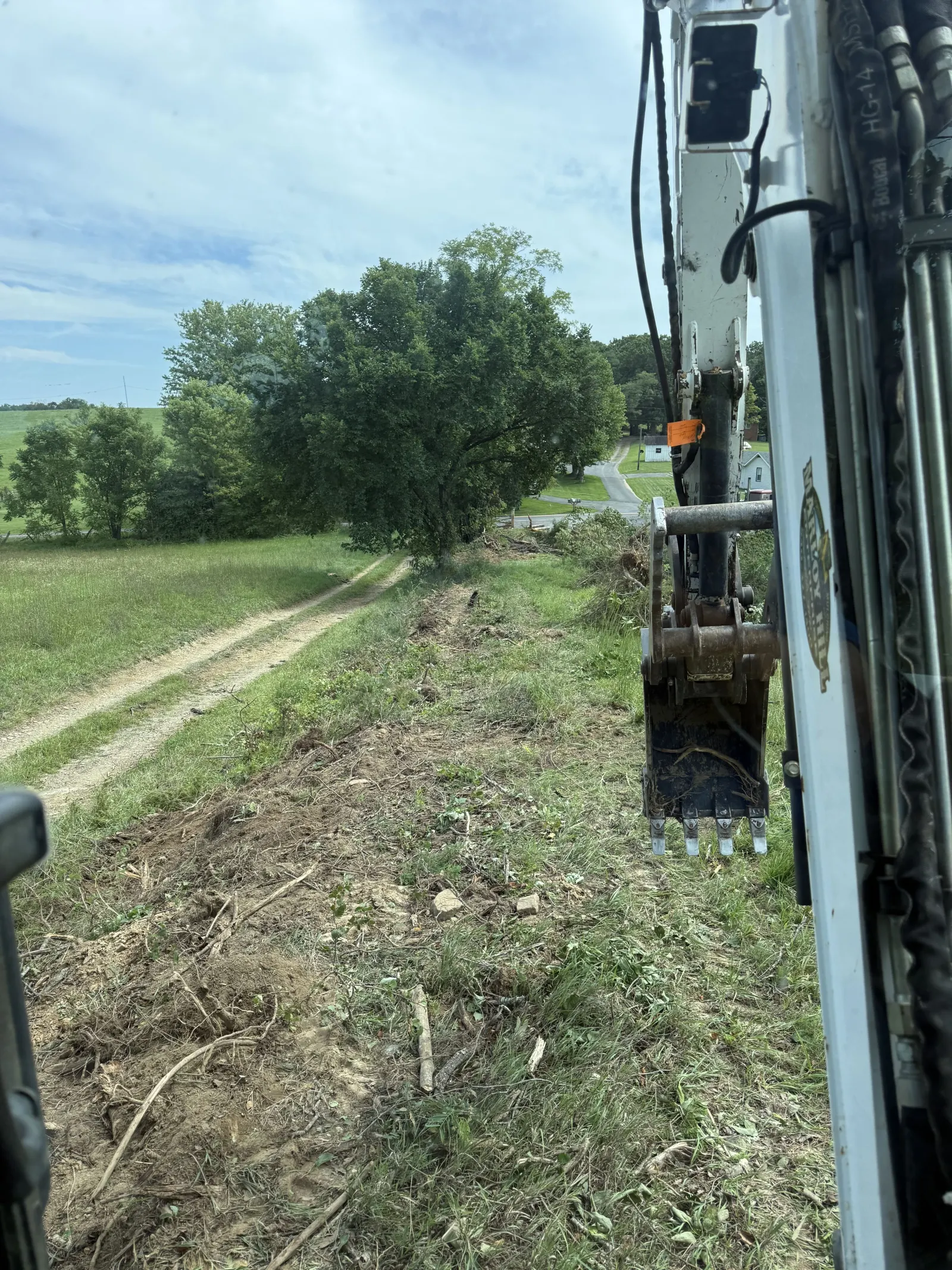
We clear the row with the machine that fits it. Where the loader can travel, the mulcher head grinds the standing brush into a chip layer. Where the row runs along a bank or a live fence, the mini excavator reaches in with the brush cutter. That keeps tracks out of the soft ground and off the wire.
A right of way is only worth what you can drive on it. Deeded rights of way to back tracts grow shut fast in this country. Brush closes in from both sides until a truck and trailer will not fit. We clear the lane back to its full width so equipment and vehicles get through.
The same work opens sight lines where a lane meets a public road. It clears the strip along a road frontage so the ditch and the bank stay in view. West Virginia's fence law puts a limit on hedge fences along roads and farm lines. Branches cannot hang more than 18 inches over the dividing line or into the road.
Once a lane is open, the ground under it usually needs help. Ruts and washed out sections show up as soon as the brush is off. That is where gravel drive work comes in, and the lane can be shaped and stoned on the same trip.
Before anything gets cut, the line needs to be settled. A survey and the corner pins tell you where the fence belongs. We clear to the line you mark, and we stay on your side of it. If the line is in question, get it surveyed first, because a cleared row is hard to undo.
West Virginia law splits the cost of a partition fence when both sides farm or graze the ground. The law also sets out a written notice to the adjoining owner, with ten days to answer. Sorting that out before the clearing starts saves a second trip.
Fence crews want several feet of working room on both sides of the line. Tell us the width you need and we cut to it. Old posts and stumps in the post line come out with the excavator bucket. That is the same stump removal work we do after clearing.
Free, no-obligation estimates across the Eastern Panhandle and the northern Shenandoah Valley.
(540) 327-1400From the first call or text to the finished property, here is how it goes.
Call or text (540) 327-1400 and tell us what the property looks like. Photos and a map pin help us picture the ground before we drive out.
We meet you at the property and go over what you want done. We check the slope, the wet spots, the trailer access, and what has to come down.
We give you a price for the work you asked about. The job goes on the schedule once you approve it.
The loader and the excavator come in on our trailer. Clearing, stump work and grading happen on the same job when the ground allows.
Before the machines load up, we go over the finished ground with you. You see the grade and where the chips and dirt ended up.
Common questions about fence line clearing across the Eastern Panhandle and the northern Shenandoah Valley. If yours is not here, call or text and ask.
We cut overgrown fields, pastures and fence rows back down to open ground. A brush cutter on the mini excavator reaches banks, ditch lines and fence rows from level footing.
Learn More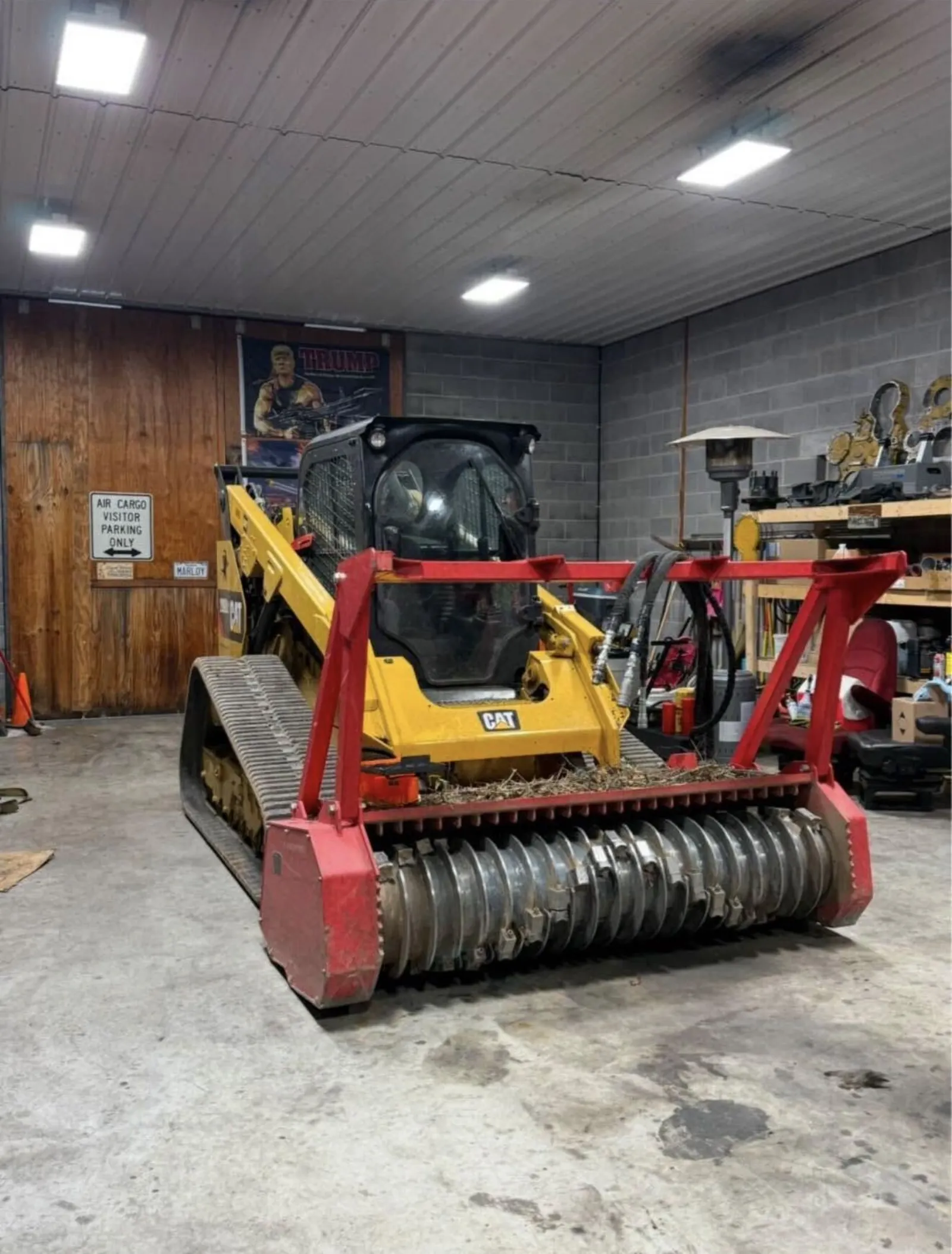
We grind standing brush, saplings and small trees into mulch with a mulcher head on our tracked loader. The chips stay on the ground and hold the soil in place.
Learn More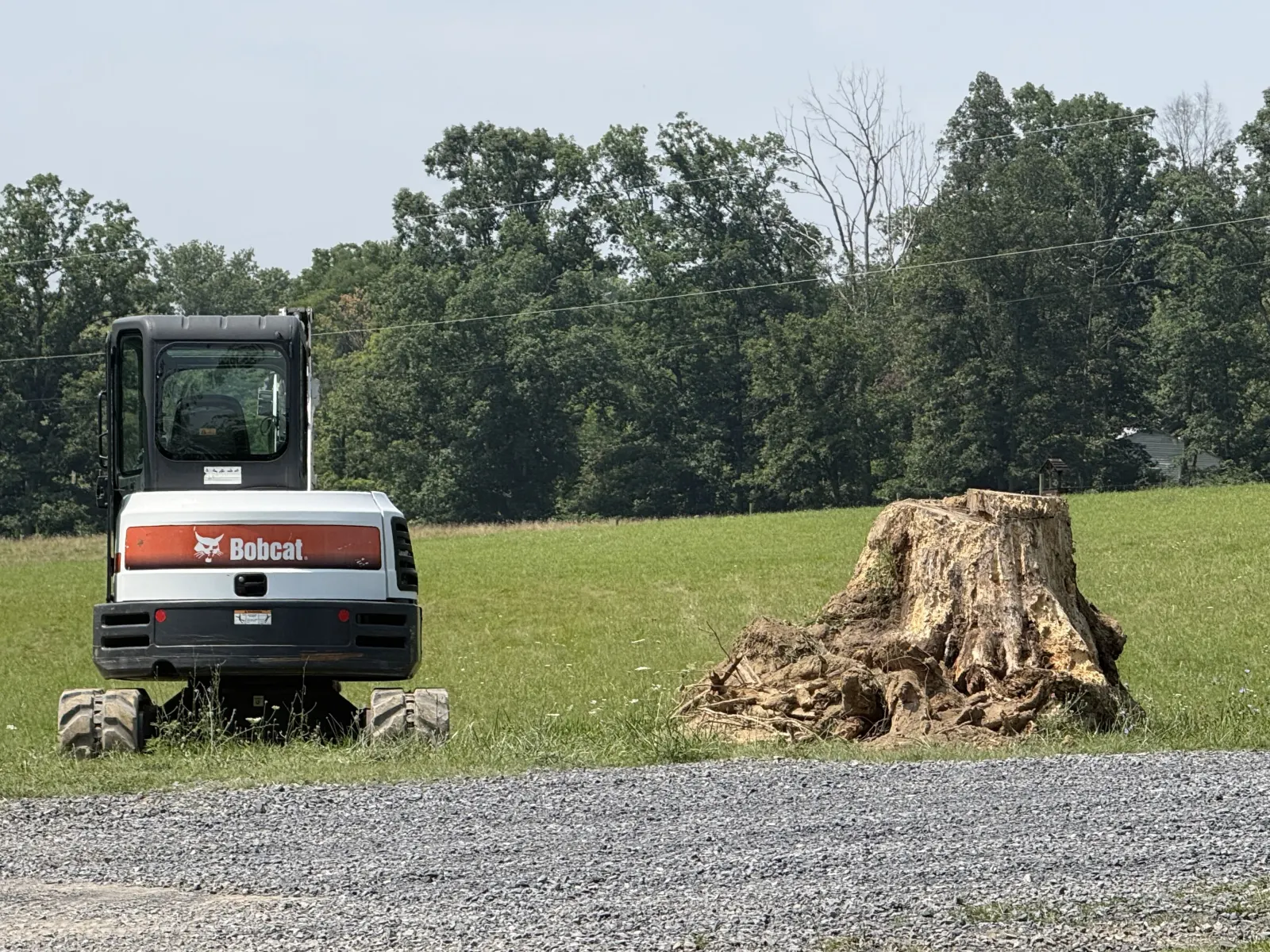
We dig stumps out with a mini excavator, root ball and all. The hole gets backfilled and bladed level so the spot can be mowed or built on.
Learn MoreWe work out of Augusta, on US-50 between Romney and the Virginia line. That means ridge ground, shale and clay soil, grown-up fence rows, and old pasture growing back in.
A tracked loader with a mulcher head clears standing growth, and a mini excavator does the digging. Tracks spread the weight on soft ground and hold better on slopes than wheels.
We come out, look at the property with you, and price the work. The estimate costs nothing and gives you a number before any machine shows up.
We cover Hampshire, Mineral, Hardy, Grant, Morgan and Berkeley counties in West Virginia. East of the line we reach Winchester and Front Royal, roughly 50 miles from Augusta.
Tell us where the property is and what you want the ground to do. Call or text (540) 327-1400, or fill in the form and we will get back to you.
Tell us about the job and the ground. We will get right back to you.